
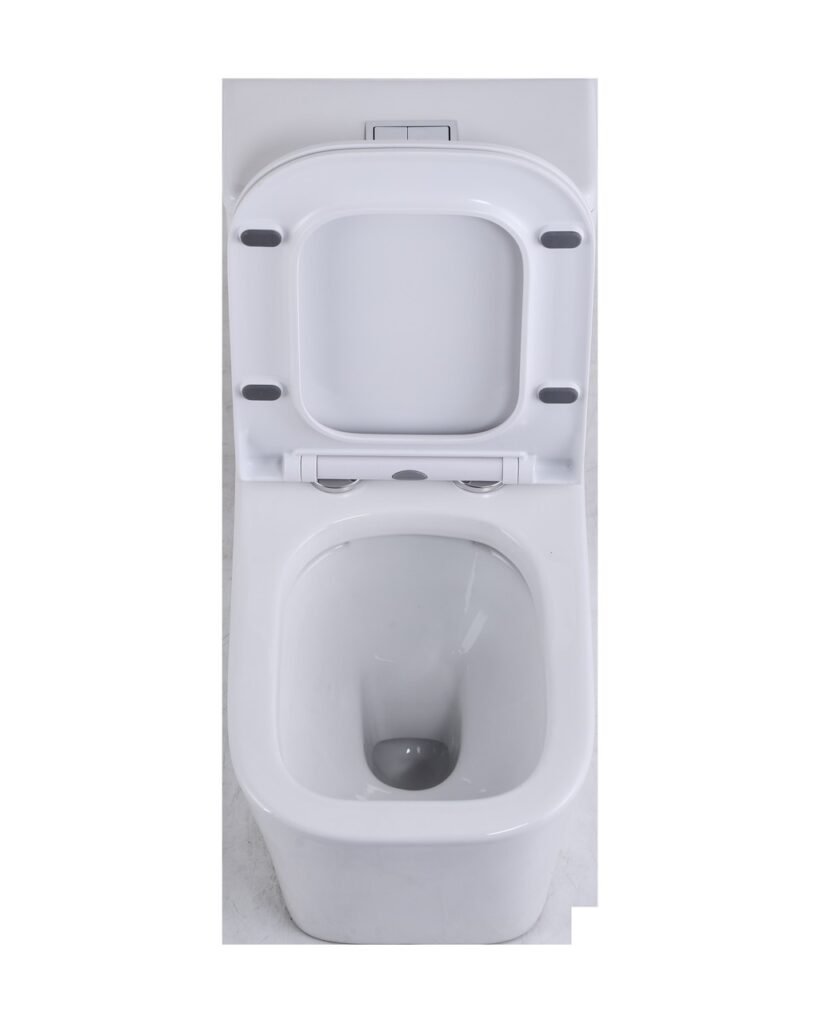
The mark on the underside is the only link
Once a container is unpacked, the pallets are broken down and the pans are on site, the only thing that still ties a delivered piece to the run that produced it is a mark on the ware itself. Everything else — the invoice, the packing list, the container number — describes the shipment rather than the firing.
That is what traceability means in this trade. It is not a document filed in an office. It is the ability to take a specific piece, read what is on it, and follow that back through inspection, packing and shipping to the point where it was made. If that chain cannot be walked, a fault is a conversation about a whole delivery rather than about a specific batch.
What a mark has to carry to be useful
A mark is only useful if each element on it is meaningful to somebody at the other end. Four kinds of information do that work, and a mark that carries only some of them will be read as decoration.
- The model identity, so the piece can be matched to the order it belongs to.
- The production reference, so the piece can be matched to the period and the run in which it was made.
- The inspection reference, so the record of the checks the piece passed can be found.
- The date or period of production, so ageing and storage time can be accounted for if a question arises later.
Whether those elements are cast in, stamped, printed on a label or applied some other way is a legitimate question for a buyer to ask, but it is a question about a specific factory’s process rather than about traceability in general. What matters is that the elements exist and that the supplier can read them back to you.
A label applied separately from the ware has one weakness worth knowing about. It travels with the packaging rather than with the piece, so once the pallet is broken the label can be separated from the item it describes. A mark that belongs to the piece itself cannot be lost that way, which is why the location of a mark matters as much as its content.
What traceability should let you do
Traceability is worth having because it changes what is possible when something goes wrong. The test is not whether a factory can produce a code; it is what the code allows you to do afterwards.
- Isolate a problem to a batch rather than to a delivery, so a whole shipment is not condemned for one run’s fault.
- Check whether other pieces from the same run went to other destinations, which matters when the fault is in materials rather than handling.
There is also a forward-looking use. Where a buyer keeps records by batch, a complaint from a project can be answered with evidence rather than with an apology, because the inspection history of that piece can be retrieved rather than reconstructed.
Inspection records and what they contain
A batch reference is only useful if there is a record to reach. In a plant where forming, glazing, firing and inspection happen in one place, the check results can be attached to the run rather than to a purchase. That is what makes the reference worth reading.
Our own production sits in one plant at Chaozhou: the factory was established in 2021, covers 51,000 m² and employs 285 people, with casting, glazing, firing, QC and export under one roof. Bodies are fired in our own tunnel kiln. That arrangement is what makes a production reference answerable, because the records and the ware belong to the same organisation.
Where a supplier buys finished ware and resells it, the reference on the piece belongs to somebody else’s production and the reseller may not be able to reach the record at all. That is a practical limit on traceability worth testing before an order, not after a problem.
What to ask a factory for
Traceability is easy to request and easy to verify. Four questions establish whether a supplier can actually walk the chain, and the answers can be checked against a sample.
- What is marked on the ware, and where on the piece is it applied?
- Given a mark on a delivered piece, what records can you retrieve against it?
- How long are those records kept, so a claim after storage can still be investigated?
- Can the marking be linked to the inspection record for the run, rather than only to the shipment?
A supplier who answers these questions with specifics can support a claim. A supplier who answers with a general assurance about quality has not answered them, and the difference shows up at the moment a buyer needs the records most.
Where traceability meets a claim
Most ceramic claims fall into a small number of categories: breakage in transit, a surface fault that appears in use, or a dimensional departure found on site. Each is answered differently, and traceability helps with all three because it decides what the claim is actually about.
A breakage claim is usually about packing and handling and points back to the shipment. A surface fault points back to the firing and the inspection record. A dimensional departure points back to the run and to the figures agreed in the order. Without a batch reference, all three collapse into a single argument about the delivery, which is harder for both sides.
This is also why the mark has to be readable without special equipment. A reference that can only be decoded by the factory that applied it is useful to that factory and not to the buyer holding a piece on site. The practical test is whether somebody on the receiving side, with the item in hand, can read enough from it to ask a precise question.
Read traceability as the mechanism that makes an after-sales conversation narrow. It narrows the question from “what is wrong with this shipment” to “what is recorded about this run”, and narrow questions are the ones that get answered.
Frequently asked questions
Why does a ceramic toilet carry a code?
So a delivered piece can be tied back to the run that produced it. The invoice and packing list describe a shipment; the mark on the ware is the only thing that points at production. Without it, a fault can only be discussed as a whole delivery rather than as a specific batch.
What should a batch code let me find out?
Which run the piece came from, when it was produced, and what inspection records sit against that run. That in turn lets a buyer isolate a problem to a batch rather than to a shipment, and check whether pieces from the same run went elsewhere.
Do you publish a batch numbering system?
We publish our documents and drawings rather than a coding manual, and we will state plainly what is marked on the ware and what records can be retrieved against it. Ask what is applied to the piece, where it sits, and what can be looked up from it, and you will get a straight answer.
How long should records be kept?
Long enough to cover the life of a claim, including the time goods spend in storage before installation. Ask the question directly, because a retention period is a commitment a supplier either makes or does not, and it decides whether a late claim can be investigated at all.
Does traceability help with a breakage claim?
It helps by narrowing the question. A breakage usually points at packing and handling rather than at firing, and a batch reference lets that be checked rather than assumed. It separates a transit failure from a production one, which is the distinction a claim turns on.
What if a reseller cannot trace the ware?
Then the reference on the piece belongs to somebody else’s production and the reseller may not be able to reach the record. That is a practical limit, and it is worth testing before an order by asking the four questions above rather than after a problem appears.
Related on this site
Documents and certificates
- The plant, the kiln and the QC record
- Certificates and the markets they cover
- Ask what is marked on the ware