
The last cheap moment to find a fault
Inspection before packing is the last point at which a fault is cheap to deal with. The piece is still in the plant, still in the same building as the people who made it, and still hours away from being wrapped and stacked. A defect found here is a piece set aside. The same defect found on site is a claim, a replacement and a container that has already crossed an ocean.
That arithmetic is why the check before packing carries more weight than its position at the end of the process suggests. It is not the only inspection in a plant, and it is not the most technical. It is the one whose result reaches the buyer, because it decides what is allowed to leave.
What a fired pan is checked for
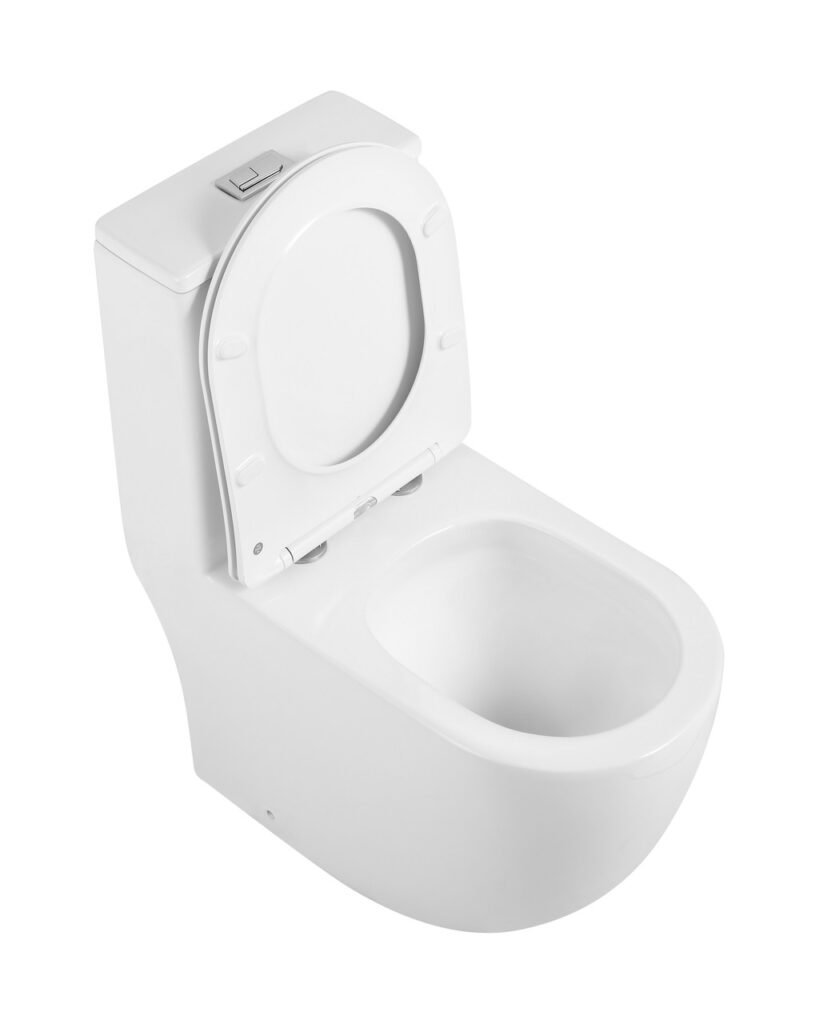
A fired ceramic body is checked against a short list of conditions. Each one is either visible on the piece, measurable on the piece, or confirmable by operating the fixture.
- The glaze surface: colour, gloss and continuity, judged against the standard the plant holds.
- The rim and the seating face: whether they are sound and whether a seat will sit on them properly.
- The body: cracks, chips and thin sections, which are looked for rather than measured.
- The dimensional figures the order made critical, checked against the range agreed for them.
- The set: that the piece carries what the order said it carries, including any fittings supplied with it.
The list is short because most of the risk sits in a small number of places. A glaze fault, an unsound rim and a missing fitting account for the bulk of what goes wrong after delivery, and all three can be found before the piece is wrapped.
Checks that are visual, and what that limits
Several of the checks on a fired body are made by eye, and a visual check is only as good as the conditions it is made under. Light, viewing angle and the distance between the inspector and the piece all change what can be seen. A fault visible under one lamp may be invisible under another.
That is not an argument against visual inspection. It is a limit to record honestly, because a buyer who treats a visual check as a measurement will expect a certainty it cannot provide. A visual check says the piece looked sound under the plant’s conditions on the day it was examined. That is a real statement, and it is narrower than a promise.
A second limit is that a visual check cannot see what has not yet happened. A body that is sound when it leaves may be damaged in handling, and no amount of inspection at the plant changes that. This is why packing and handling are a separate line of control rather than part of inspection.
Where the checks sit in the process
Inspection is not a single event at the end of a line. In a plant where forming, glazing, firing and packing happen in one place, checks can be placed at several stages, and each placement catches a different kind of fault.
A check after casting catches a shape that is wrong before it is glazed, when it can still be taken out without wasting a firing. A check after glazing catches an application fault before it is sealed by heat. A check after firing catches what the kiln produced, which is the stage at which the body’s own properties become final. A check before packing catches the whole piece as it will arrive.
Our own line runs this way: casting, glazing, firing, QC and export happen in one plant at Chaozhou, and bodies are fired in our own tunnel kiln. The plant was established in 2021, covers 51,000 m² and employs 285 people. Keeping the stages together is what allows a check to be placed where it does the most good rather than where the goods happen to be finished.
What inspection cannot settle
An inspection report is evidence about the pieces that were examined, on the day they were examined. Reading it as anything more is where buyers get into difficulty.
- It does not certify the delivery as a whole, because it is based on what was looked at rather than on every piece.
- It does not cover damage after packing, which is a handling and transit question rather than a production one.
- It does not replace a market approval, which is a process tied to a model and a market.
- It does not turn a visual judgement into a measurement, because the checks that are visual remain visual.
The useful way to read an inspection is as a record of what was checked and at what stage. That is checkable, and it tells a buyer how the plant works rather than only what it promises.
What to ask for in a QC record
A buyer cannot attend every inspection, so the record is what stands in for presence. Four details make a record useful rather than decorative.
- What was checked, listed as items rather than summarised as a result.
- At which stage each check happened, since a check after firing answers a different question from one after casting.
- How the check was made — measured or judged by eye — because the two answer with different strength.
- What happened to pieces that failed, whether they were set aside, reworked or rejected.
The fourth item is the one that shows whether a plant has a process or only a form. Every line produces some pieces that do not meet the standard; what matters is whether the record says what became of them.
In-house inspection and third-party inspection
In-house inspection and an independent inspection answer different questions. In-house inspection is the plant checking its own output before it is released, made by people who know the line and can stop a piece at source. An independent inspection is an outside party confirming what is there at a point in time, usually before shipment.
Neither replaces the other. An in-house check is continuous and cannot be arranged at short notice; an independent check is periodic and can be commissioned by the buyer. A buyer who has both is covering the line and the shipment, which are two different things.
Read the inspection before packing as the plant’s own gate. It is the moment a piece either joins a shipment or does not, and it is the last point at which that decision is cheap. Everything after it is handling, transit and a conversation.
Frequently asked questions
Why inspect before packing rather than at the end?
Because it is the last point at which a fault is cheap. The piece is still in the plant, where a defect means setting one item aside rather than raising a claim. Once the container has sailed, the same defect costs a replacement, a shipment and time.
What is checked on a fired toilet?
The glaze surface, the rim and seating face, the body for cracks and chips, the dimensions the order made critical, and whether the piece carries the fittings the order specified. Each is either visible on the piece, measurable on it, or confirmable by operating the fixture.
Are all checks measured?
No. Some are judged by eye, including the glaze surface and much of the body inspection. A visual check is a real check, but it depends on light, angle and distance, so it says the piece looked sound under the plant’s conditions on the day. Reading it as a measurement expects a certainty it cannot give.
Does a QC record prove the whole delivery is sound?
No. A record is evidence about the pieces that were examined, on the day they were examined. It does not certify every item in a container, and it does not cover damage after packing, which is a handling and transit question rather than a production one.
Can I commission my own inspection?
Yes, and it answers a different question from the plant’s own checks. An independent inspection confirms what is present at a point in time, usually before shipment. A plant’s own inspection is continuous and catches pieces at source before they are packed. Buyers often use both.
What happens to pieces that fail?
They are set aside, reworked where the fault allows, or rejected, and the record should say which. That line is worth asking about, because every line produces some pieces that miss the standard. A record that describes what became of them says more than a record that only lists passes.
Related on this site
Documents and certificates
- The plant, the kiln and the QC record
- Certificates and the markets they cover
- Catalogues, drawings and test reports
Related reading
- What vitreous china describes
- Third-party inspection for sanitaryware
- Batch Codes and Traceability on Ceramic Ware