
The short answer
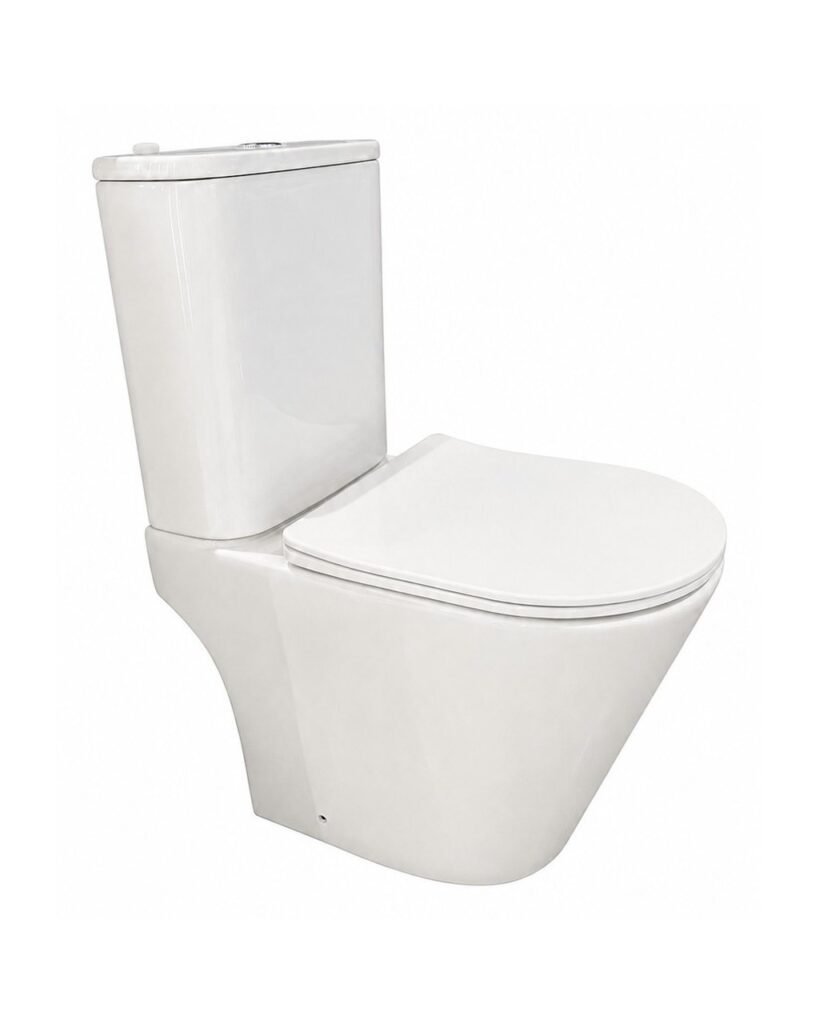
Two-piece toilets dominate volume export because they are economical to produce, ship and stock. One-piece toilets win on aesthetics and easy cleaning, which is why they lead in premium residential and hospitality projects. Neither is "better" — the right answer depends on your market position and price point.
Two-piece: the volume workhorse
The tank and bowl are separate units joined at installation. Because the two parts fire independently, yields are higher and costs stay low. Buyers get a lower unit price, simpler spare-part handling (a cracked tank can be replaced without changing the bowl) and easier warehouse stacking for mixed containers.
- Lower landed cost for price-sensitive markets
- Flexible mixed-container ordering across models
- Simpler replacement of individual parts
One-piece: the design argument
A one-piece toilet is cast as a single seamless profile — no joint line for grime to collect, and a cleaner silhouette that photographs well in showrooms and hotel bathrooms. Fully skirted one-piece models hide the trapway completely, which matters in markets where design-led plumbing fixtures sell at a premium.
- Seamless, easy-to-clean profile preferred in projects
- Higher perceived value for retail and hospitality
- Higher production cost — expect a price step up
Logistics differences buyers underweight
Two-piece models pack denser and tolerate handling better, so they generally cost less per unit to ship and arrive with fewer claims. One-piece units need more protective packing per set. If your first order is a market test rather than a committed programme, a two-piece-heavy mix is the lower-risk way to start.
What to ask a supplier
Ask which configurations a factory actually runs on dedicated lines — a supplier that only photographs one-piece models but fires mostly two-piece will quote you more honestly on the one they do daily. At Sheng Ge both profiles are in production, from two-piece classics such as model 6093BAC to fully skirted one-piece models such as 6079A. White-glaze MOQ is 0 on either, so you can test the mix that suits your market.
Related on this site
- 6093BAC — a two-piece classic in production
- 6079A — a fully skirted one-piece
- The rest of the range, one-piece and two-piece
- Ask which profile fits your market