
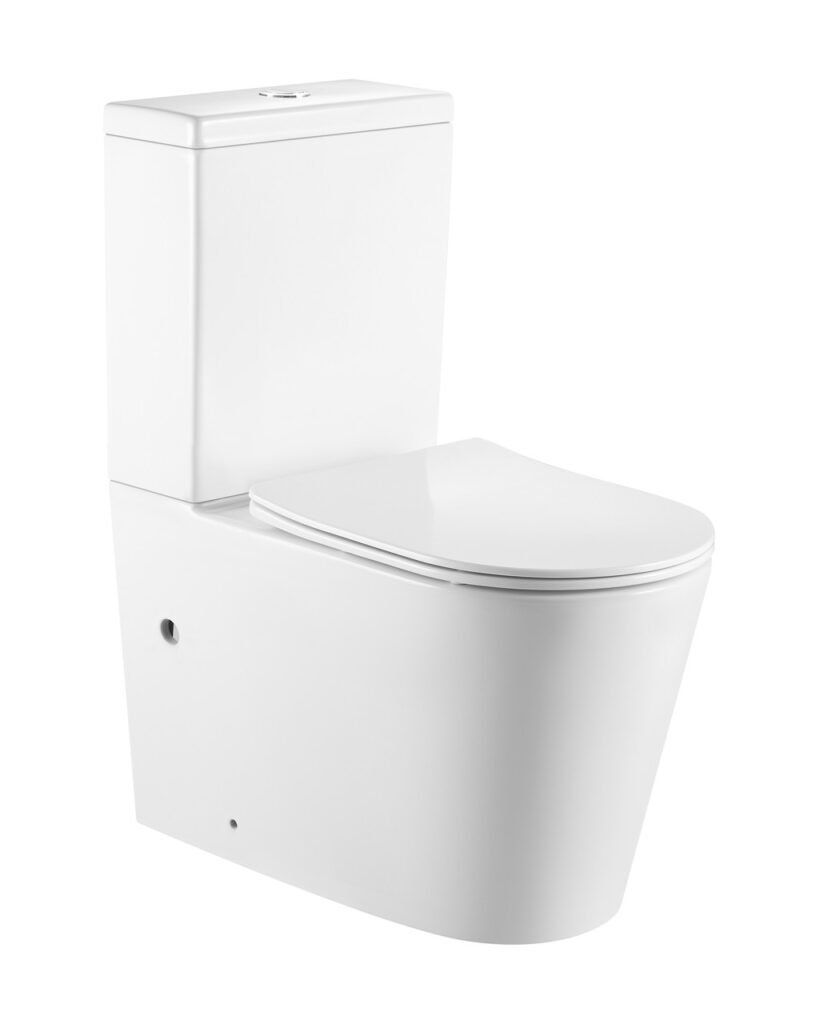
What dual flush means
A dual-flush cistern releases one of two volumes on demand: the full volume, normally used after solids, and a reduced volume for liquid waste. The user chooses between them at the button or the plate.
In daily use the reduced setting is the one that gets pressed most often, which is where the saving comes from — the pan does the same job with less water most of the time. The mechanism does not force the user to press one or the other; it only makes the choice available.
On our two-piece models the actuation is two push buttons in the cistern lid, and the typical volumes are 3/6 L. Treat that as typical rather than universal: the volume that counts is the one written on the order specification, because any water-efficiency case a project has to make will be built on the figure the factory ships, not the figure in a catalogue.
Where the mechanism sits in your own range matters as much as what it does. In a retail channel dual flush is a feature bullet, and the shopper reads the button rather than the volume. In a project channel it is a substitution question: the specifier has usually written both a volume and an actuation type, and what you supply has to match both, or the submission is rejected when it is reviewed.
Dual flush is a mechanism, not a volume
Two pans can both be described as dual flush and use different volumes. The phrase tells you there are two settings. It does not tell you what they are, and it says nothing about how well the pan performs.
That distinction matters in markets where water efficiency is regulated rather than advertised. In Australia, for example, water efficiency is approved through WELS, which registers a specific model at a specific volume. A page that says dual flush does not register anything. If you are importing into a market with a water-efficiency scheme, the figure you need is the registered volume of the model you are actually shipping.
So when a supplier quotes a dual-flush pan, ask for the volumes and the actuation in writing. A product page cannot tell you whether the cistern is in the crate, and a photograph cannot tell you the volume. Both answers belong on the quotation, next to the model number you are actually ordering.
Three actuations, and why the difference matters
Our dual-flush range falls into three groups. The group decides who supplies the cistern, and that is the single biggest source of friction on a first project order.
- Top push buttons, cistern included. On our two-piece models the cistern is part of the set and the buttons sit in the lid: 6093BAC, 6089A, 6002 ALZANO and 6060 BARI.
- Top push buttons, one-piece. 6079A is a fully skirted one-piece with dual-flush top buttons. 6085 is a low-profile one-piece whose dual-flush specification is confirmed per market at order stage.
- Wall plate with an in-wall cistern, cistern not included. 2303 X-CUBE and 2381 VOGHERA are wall-hung pans whose flush is operated by a dual-flush wall plate. The concealed in-wall cistern is supplied by the installer, and the plate has to be matched to that cistern.
- Concealed cistern built into the body. 3303 X-CUBE and 3380A ALZANO are back-to-wall pans that hide the cistern behind the ceramic.
So if you ask for a dual-flush wall-hung toilet and expect the cistern in the crate, you will order the wrong item. Say which actuation you need, and say who is supplying the cistern.
What to put in the order specification
Six lines remove almost all of the back-and-forth on a dual-flush order:
- Actuation: top push buttons, wall plate, or concealed cistern.
- Cistern: included in the set, or supplied by the installer. If the installer supplies it, the plate specification.
- Volume: the two flush volumes for the model being shipped.
- Trap: P-trap or S-trap, and the rough-in.
- Seat, hinges and fixings: included, or not.
- Finish: whether it is white glaze, where MOQ is 0, or a coloured or matte version, where MOQ is 30 per model.
Each of the six lines exists because it has caused a rework somewhere. The wrong actuation produces a wall plate that does not fit the installer’s cistern. An unstated volume produces a submittal that has to be rebuilt after it is rejected. A finish that turns out to be coloured rather than white glaze moves the order from MOQ 0 to MOQ 30, which changes the commercial case on a trial order entirely.
Frequently asked questions
How much water does a dual flush toilet save?
It depends on the two volumes the cistern is set to and on how often the reduced setting is used. A dual-flush mechanism gives the user the choice; it does not, by itself, produce a saving in the way a regulator measures one. If your market runs a water-efficiency scheme, establish the figure from the registered volume of the model you import.
Is dual flush the same thing as a water-saving toilet?
No. Dual flush is a control mechanism — two settings instead of one. Water-efficiency ratings are separate approvals, taken against a specific model at a specific volume.
Can I order a dual-flush wall-hung toilet with the cistern included?
Not from our wall-hung pans. Models 2303 and 2381 operate from a dual-flush wall plate rather than a cistern on the body, and the in-wall cistern is supplied by the installer. The back-to-wall models 3303 and 3380A are different: their cistern is concealed inside the body.
Do all of your dual-flush models use the same volume?
No. The two-piece dual-flush models are typically 3/6 L. Volumes for the one-piece, wall-hung and back-to-wall models are confirmed per model, and the order specification carries the figure.
Can a dual-flush toilet be used as a single-flush toilet?
In practice, yes. A dual-flush cistern can be operated with the full setting every time, which makes it behave like a single-flush pan in daily use. Nothing requires the user to operate both settings.
What does a dual-flush claim on a product page actually guarantee?
That the model is built to take a two-setting cistern. It does not guarantee a volume, a water-efficiency result or a market approval. Confirm those three separately, for the model and the market you are buying for.
Related on this site
Two-piece dual-flush models
- 6093BAC — two-piece, dual-flush top push buttons
- 6089A — two-piece with a skirted profile
- 6002 ALZANO — two-piece, dual-flush top push buttons
- 6060 BARI — two-piece, dual-flush top push buttons
One-piece dual-flush models
- 6079A — fully skirted one-piece, dual-flush top buttons
- 6085 LUGANO — low-profile one-piece, dual flush confirmed per market
Wall-hung dual-flush pans, cistern by the installer
- 2303 X-CUBE — wall-hung pan with a dual-flush wall plate
- 2381 VOGHERA — wall-hung pan with a dual-flush wall plate
Back-to-wall dual-flush pans, concealed cistern
Range, compliance and terms
- The whole range, 89 models
- Certifications and the documents behind them
- WaterMark and WELS for Australian importers
- Ask which dual-flush model fits your project