
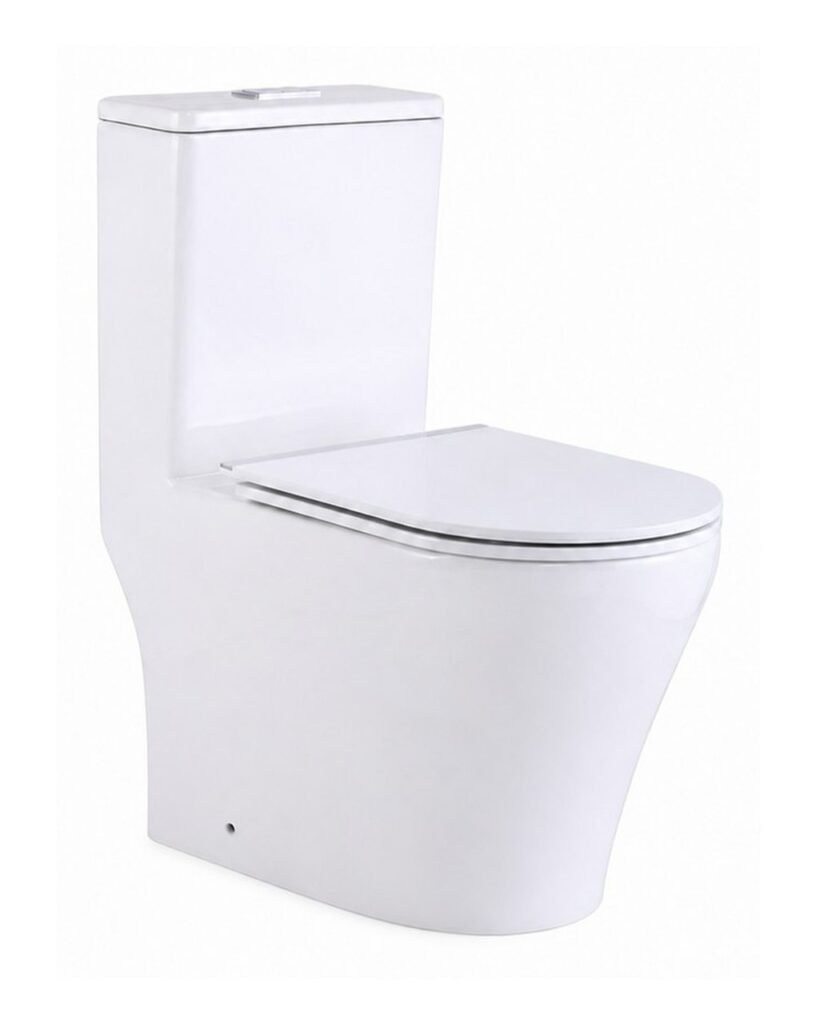
The part that fails first
Ask any maintenance team which component of a toilet fails first and the answer is consistent: the inlet valve. Not the ceramic, which outlives the building if it is not physically broken, and not the flush valve, which is cycled far less. The inlet valve is the one part that is asked to open and close every time the cistern refills, holding back mains pressure with a small moving seal, in a wet enclosure, for years.
That is why replacing one is the most common repair in the category, and why it is also the repair most often done twice. An inlet valve is not a universal part. It is matched to the cistern it sits in, to the pipework that feeds it, and to the regulations of the market it is installed in. Getting that match wrong produces a cistern that runs continuously, fills noisily, or refills so slowly that the user flushes twice — all of which get reported as a “faulty valve” when the real fault was the selection.
What the valve actually does
An inlet valve has three jobs and only one of them is obvious. It admits water to refill the cistern. It shuts that water off at a set level, using a float or a pressure-sensing mechanism to decide when the cistern is full. And, in most markets, it prevents water in the cistern from being drawn back into the supply — a backflow function that is a regulatory requirement in some countries and unknown in others.
All three are affected by the same site conditions: the pressure in the supply, the cleanliness of the water, and the geometry of the cistern. A valve selected on the first job alone will do the second badly and may not do the third at all, which is why the selection conversation should start with the site rather than with the part number.
What to confirm before ordering a replacement
Five facts decide which valve will work, and four of them can be established without dismantling anything:
- The cistern it is going into: model code, and the batch code if the cistern is one of ours, so the drawing can be pulled rather than guessed.
- How the valve connects: the thread or bayonet at the base, and whether the feed enters from the side, the back or underneath.
- The shut-off level relative to the overflow, because the valve has to stop the fill below the point where water would start running away.
- Whether the market requires a backflow device, and to what standard, since that decides the valve family rather than a variant of it.
- What the old valve looks like in place: a photograph of the cistern interior before removal is worth more than a description in an email.
Two of those five, the connection and the shut-off level, are properties of the ceramic cistern as much as of the valve. That is the reason a buyer should ask the factory for the cistern drawing before ordering a part from a merchant: the drawing says where the valve sits and how much room it has, and no catalogue listing does.
Why the fill rate has to match the cistern
Fill rate is the specification most often ignored, and it is the one that produces the complaints that sound like defects. A cistern is a volume with an overflow at a fixed height and a flush valve that also has to be re-primed after each flush. The inlet valve fills that volume at a rate, and the rate decides how the whole sequence behaves at the end of the fill.
A valve that fills faster than the cistern was designed for drives the water level up hard against the shut-off point, and the float can hunt — opening and closing repeatedly as the surface settles. That is the “valve won’t stop” complaint. A valve that fills too slowly leaves the cistern short at the moment the next user arrives, so the flush is weak and the user flushes again, which is the “flush is poor” complaint that gets blamed on the ceramic. Neither is a defective part; both are a mismatch.
What goes wrong with the wrong valve
Four failure patterns account for most of the callbacks, and each points at a different part of the selection:
- Water runs into the pan continuously. The shut-off level is above the overflow, so the cistern fills and then spills down the overflow into the bowl. The valve is doing its job; the level is wrong.
- The cistern will not stop running. Either the seal is not seating against the water it is being fed, or the mechanism is hunting because the fill is too aggressive for the cistern.
- The valve is noisy. High supply pressure through a valve intended for a low-pressure system produces hammer and whistle, and the noise is a symptom of a pressure mismatch rather than a faulty washer.
- The joint weeps at the base of the valve. The thread or bayonet does not match the cistern, and no amount of tightening will make an incompatible thread seal.
Notice that three of the four are selection errors and only one is a worn part. That ratio is why the questions in the previous section matter more than the brand of valve anyone recommends.
Reading the cistern before you buy
The cistern tells you most of what you need if you know where to look. Inside the lid there is usually a moulded or printed marking with the model and a production reference. On the body there may be a batch code, which is the same code that appears on the carton and in the factory’s record. The drawing for the model shows the valve aperture and where the feed enters.
What the cistern cannot tell you is the supply pressure on site, and that is the one item that has to be established by someone with a gauge. That is a plumber’s job, or the building manager’s, not the supplier’s — and any supplier who offers to guess it from a photograph is guessing.
The parts inside the cistern
Four components share the cistern, and knowing which is which is what stops a valve being blamed for a flush valve problem. The drawing below names them on one section.
Two readings matter for a replacement. First, the inlet valve and the float are one assembly or two depending on the design — a float on an arm is part of the valve, while a floating body that rides on the water may be separate. Second, the overflow and the flush valve are usually the same moulding, so a problem that appears at the overflow is often a flush valve seal issue rather than an inlet valve one. Checking which component is actually passing water is the first diagnostic step, and the drawing is what makes that conversation possible.
Who decides, and where our scope ends
The selection belongs to the installer, working with the buyer. The installer knows the supply pressure, the pipework and the local requirement for backflow protection. The buyer knows what the market’s regulator expects and what the maintenance contract will cost over time. Neither of those judgements can be made by the factory, and a factory that offers one is telling you more about its sales process than about the product.
What the factory can answer is narrower and more useful: what the cistern is, what aperture it has, where the feed enters, what the shut-off relationship to the overflow should be for that model, and what the drawing shows. For our own range that is a documented answer, because the cistern is formed and fired in the same plant as the pan — casting, glazing, firing and QC under one roof at Chaozhou, since 2021, on a 51,000 m² site with 285 people, across 89 vitreous china models.
We make the ceramic. We do not make or supply inlet valves, and we do not recommend brands — the valve is a bought-in component that the installer or the buyer specifies. That is not a limitation to work around; it is what keeps the responsibility clear when a cistern runs. The ceramic cistern carries the lifetime body warranty. The valve carries whatever warranty its maker offers, and the fit between them is the installer’s.
What we will do is send the drawing and confirm the cistern details before a part is ordered, which is the part of the job that a merchant cannot do from a shelf. Ask with the model code and, if you have it, the batch code.
Frequently asked questions
How do I know which inlet valve my cistern takes?
From the cistern, not from the valve: the model marking inside the lid, the batch code on the body, and the drawing for that model. Those give the aperture and the feed position. The old valve, photographed in place before removal, confirms what was there.
Can I fit any inlet valve that physically fits?
Fitting is not the test. A valve also has to shut off below the overflow, suit the supply pressure on site and, where the market requires it, provide backflow protection. A part that screws in and then runs continuously has failed two of those three.
Why does the cistern keep running after a new valve?
Either the shut-off level sits above the overflow, so water spills into the pan, or the float is hunting because the fill rate does not suit the cistern. Both are selection or setting issues. A worn seal is the third possibility and the least likely on a new part.
Why is the new valve noisier than the old one?
Usually because the supply pressure is higher than the valve was designed for. A valve intended for a low-pressure supply will whistle and hammer on a high-pressure main. The answer is the correct valve family or a pressure control at the supply, not a different washer.
Do you supply replacement inlet valves?
No. Our scope is the ceramic cistern and pan. Valves, seals and connectors are sourced by the installer or the buyer to suit the site and the market. We will confirm the cistern geometry from the drawing so the right part can be chosen.
Is the inlet valve covered by the ceramic warranty?
The lifetime warranty covers the ceramic body, not the fittings. An inlet valve carries its own maker’s warranty, and the installation that joins it to the cistern is the installer’s responsibility. Keep the valve receipt with the cistern record.
Related on this site
Documents and certificates
Related reading
- Flush types, and what each one asks of the cistern
- Concealed and exposed cisterns compared
- Wax Ring or Pan Connector: Sealing the Outlet