
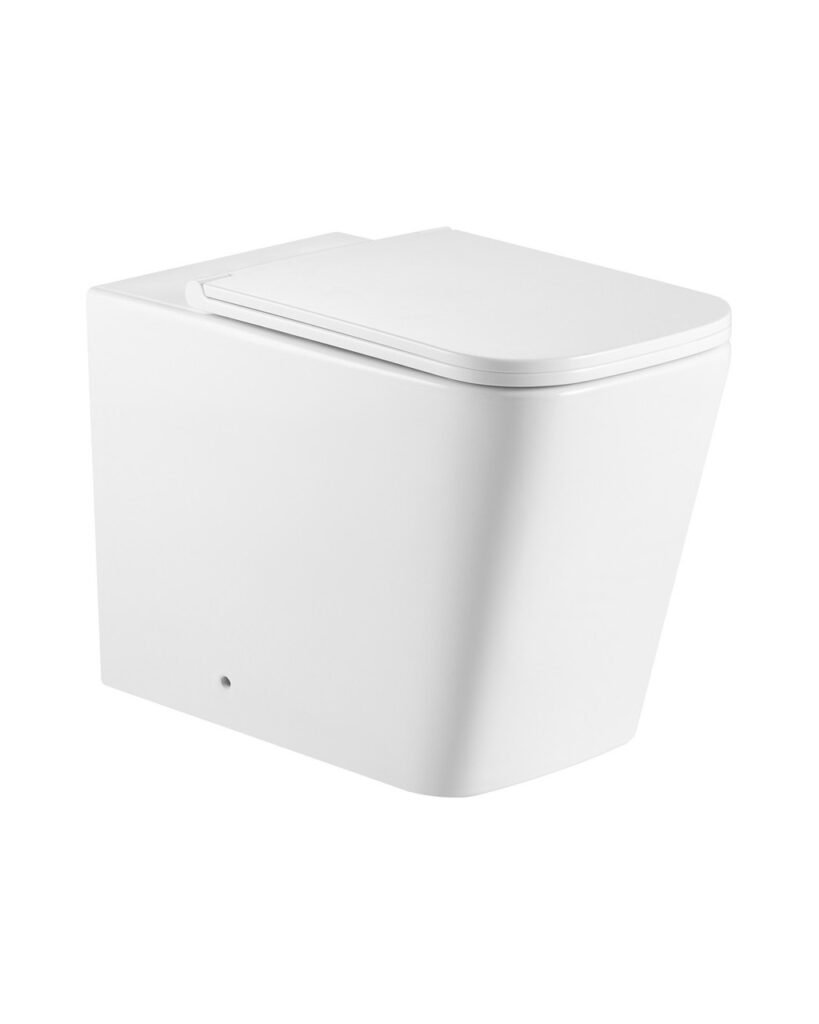
Why the sheet, not the photograph
Most disputes on a first sanitaryware order are not about quality. They are about two people ordering against different pictures of the same thing. The photograph on a product page shows the shape of one sample in one finish; the sheet shows the numbers. When the two disagree, the sheet is what both sides should be reading.
That is the whole case for reading a spec sheet line by line before a purchase order is raised, and for quoting by the printed code rather than by the name of the shape.
The eight lines
- The printed code and the line name together. The code identifies the model; the line name identifies the family. They are not the same thing, and the code is the one to order against.
- The printed dimensions in millimetres — taken from the drawing sheet rather than from the photograph.
- The mounting: floor-standing, back-to-wall or wall-hung.
- The flush value.
- The rim, where the model records one.
- The trap arrangement and the rough-in.
- The finishes the model is produced in — the model’s finishes, not the line’s.
- What is in the set. Where the set includes an extra part, the description says so; where it says nothing, treat the part as unconfirmed and ask.
Where the printed numbers come from
Three documents, and all three are open access on our downloads page — no login and no form.
- The bathroom catalogue, 50 pages, carrying the printed codes and dimensions exactly as they appear in print.
- The smart toilet catalogue, 18 pages, covering the flush and wash functions and the builds each model is based on.
- The technical drawing set: one sheet per model with front, side and top views, dimensions in millimetres and the printed size, indexed by code, covering 100 model sheets — also available as one file per model, so a single sheet can drop straight into a project pack.
The reason to publish all three rather than an enquiry form is practical. A buyer who can check a pan against its own drawing before asking for a price asks a better question, and a price based on a better question is a price that holds.
The two lines buyers misread most
Options are not contents. Many of our models carry the line “S-trap and P-trap options on the spec sheet”. That sentence says a choice exists and has to be made on the order. It does not say both arrangements ship with the pan. The same applies to any model recorded with more than one arrangement: the specification is what you fix, not what you receive in duplicate.
The line name is not the model. A line name can cover more than one model with different builds. ALZANO is the clearest example in our own range: 3380 is a back-to-wall pan, while 3380A is a back-to-wall toilet with a concealed cistern. Same name, same family, different product. Order by the printed code, and put the code on the submittal as well as the name.
What the sheet deliberately does not say
- Price. Quotations are raised per order against the code; white-glaze models start at MOQ 0 and are quoted FOB Shenzhen.
- Lead time. The production window belongs to the order, not to the model, so it is confirmed when the order is confirmed.
- Approvals. CE, WaterMark, SASO and the rest are processes tied to a model and a market, and they sit on the certifications page and in the downloads library rather than on the product sheet.
- Anything that is not stated. If a line is absent, the answer is “unconfirmed”, not “no” and not “yes”.
The practical workflow is short: read the sheet, check the drawing, fix the open choices, then send the code with the open items listed. Four lines of a request written that way will produce a quotation that matches the drawing.
How to read a drawing sheet
A technical sheet carries three views and one line of numbers. Reading them in a fixed order is what keeps a submittal pack consistent.
- The printed code, first. Everything else on the sheet belongs to that code and to no other.
- The printed size line — the overall dimensions in millimetres. Read the numbers before the views, so the views confirm them rather than replace them.
- The trap and the rough-in as printed on the sheet, not as scaled off a drawing. Scaling a view is a guess; the printed figure is a specification.
- The front, side and top views last, to see the shape and how the body is meant to sit against the wall. Dimensions are reproduced as printed, so nothing has to be converted.
One sheet is a specification. The same sheet inside a project pack is evidence, which is why the drawing set is published as one file per model as well as a single document.
Frequently asked questions
Where do I find your technical drawings?
On our downloads page, in the open. One sheet per model with front, side and top views and the printed dimensions in millimetres, indexed by code, covering 100 model sheets — as a single set or as one PDF per model.
What does “options on the spec sheet” mean?
That the model can be built with either arrangement and the choice is confirmed on the order. It does not mean both are supplied. If a model is recorded with one arrangement as standard, the product page says so instead.
Can you quote from the catalogue code alone?
Yes — that is exactly what the code is for. Quote by printed code, then state the choices the code leaves open: trap and rough-in, finish, and any part you need to be certain is in the set.
Which sheet should go into a project submittal?
The drawing sheet for the printed code you are supplying, so the submittal and the order describe the same object. Pair it with the certificates that cover that model and that market, which sit on the certifications page and in the downloads library.
Does the spec sheet include the price?
No. The sheet carries the model; the quotation carries the commercial terms. Prices are raised per order against the code, and the destination and volume are what change them.
Why do two models that look alike have different dimensions?
Because they are different models. A change of a few millimetres in depth or height is enough to make a separate printed code with its own drawing, its own trap arrangement and its own finish list. Compare the codes and the drawings, never the resemblance.
Related on this site
The documents
- Catalogues, technical drawings and certificates — all open access
- Certificates and the markets they cover
- From your drawing to a loaded container
Codes worth reading side by side
- 3380A ALZANO — back-to-wall toilet, concealed cistern
- 3380 ALZANO — back-to-wall pan
- 6009C MASSA-P — P-trap as standard
- 6009 MASSA-S — S-trap recorded at 140 or 250 mm
- 6066 JESI — P-trap at 180 mm and an S-trap option