
Why supplier diligence matters
Sanitary ware is a long-cycle, quality-sensitive purchase. A container of toilets sits in your warehouse or on your project for months before end users judge it — by then, a weak glaze or a poorly set flushing mechanism is expensive to fix. The supplier choice, not the unit price, decides most of that risk.
Here is the checklist we use with buyers who visit our factory in Chaozhou — and the same questions you should ask any supplier you evaluate.
1. Verify the factory, not just the catalogue
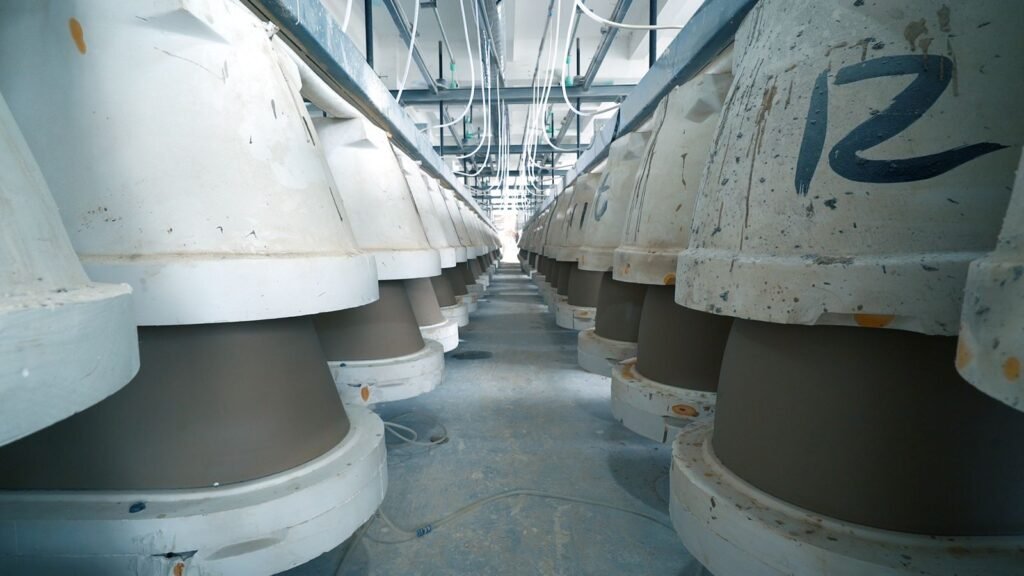
A real ceramic factory is defined by its production floor: high-pressure casting, spray glazing, roller kiln firing and a QC bench that tracks every batch. Ask for a live video walkthrough if you cannot visit. Confirm who actually fires the bodies — factories that buy finished bodies from third parties have far less control over glaze quality and delivery timing.
2. Check certification against your market
Certificates are market-entry documents, not marketing badges. A supplier exporting to Europe should show CE marking on the products, not only a certificate PDF. Australia and New Zealand require WaterMark; Saudi Arabia requires SASO; Malaysia requires CIDB or SIRIM. If your market is one of these, ask the supplier to confirm the marking is carried on the actual product and ask for the certificate file before sampling.
3. Confirm MOQ, samples and payment before design talks
Many ceramic suppliers impose minimums that make first orders needlessly large. A white-glaze catalogue model with MOQ 0 lets you test the market with a single container or even mixed models. Free samples are standard in this industry — freight is usually the only cost discussed. On payment, T/T and L/C at sight are the norm for ceramic export orders; be wary of suppliers who push for unusual terms before you have seen a sample.
4. Ask what happens when a piece breaks
Ceramic is brittle in transit, and every importer handles claims. A mature supplier quotes a realistic breakage allowance, replaces defective pieces on the next shipment and answers warranty claims through a named export contact. Sheng Ge covers the ceramic body for life and fittings for five years — ask any candidate to match that in writing.
5. Use lead time as a signal
Thirty days for standard production and 30–40 days for custom or sample orders is a realistic rhythm for a factory with dedicated lines. A supplier who promises impossibly fast turns on made-to-order glaze or OEM models is usually quoting before checking the kiln schedule.
If you are evaluating suppliers for toilet, bidet or basin programmes, we are happy to walk you through our own answers to each point above — samples, certificates and spec sheets included.
Related on this site
- Inside the 51,000 m² Sheng Ge factory in Chaozhou
- The certificates and test reports a supplier should be able to show
- The 2026 catalogue and technical drawings, free to download
- Send your market and target models