
The hotel equation
Hotel bathrooms are judged twice: once by the guest and once by housekeeping. The guest notices the line of the suite and whether it photographs well. Housekeeping notices how fast the room turns. Wall-hung toilets win on both counts — which is why they are specified in new-build hotels across Europe and increasingly across the Middle East and Southeast Asia.
What specifiers check first
When a hotel project shortlists sanitary ware, three requirements dominate before price is even discussed.
- Floor-to-wall cleaning: a wall-hung bowl leaves an unbroken floor line, so the room cleans faster and the floor detail reads as more premium.
- Concealed cistern: the ceramic stays clean and the flush mechanism lives behind the wall — fewer exposed parts, fewer failure points in the guest room.
- Dual-flush operation: guests use one button, housekeeping uses the other; water consumption per occupied room stays manageable.
Specifying the system, not just the bowl
A wall-hung toilet is a three-part system: the in-wall cistern frame, the wall plate and the ceramic bowl. Projects that specify bowl and frame from different suppliers pay twice for coordination. The practical rule is to fix the frame brand and plate model early, then confirm the bowl against those fixing centres — and to get that confirmed in writing, in millimetres, before samples.
Why ceramic quality decides the outcome
The frame and fittings are replaceable; the ceramic is not. A wall-hung bowl with weak glaze or uneven casting shows in exactly the place housekeeping inspects daily. That is why project buyers should ask a factory four questions: where the body is fired, what the glaze warranty covers, whether the model carries CE marking for EU projects or WaterMark for Australia, and how replacement pieces are handled on a claim.
Specifying Sheng Ge on a project
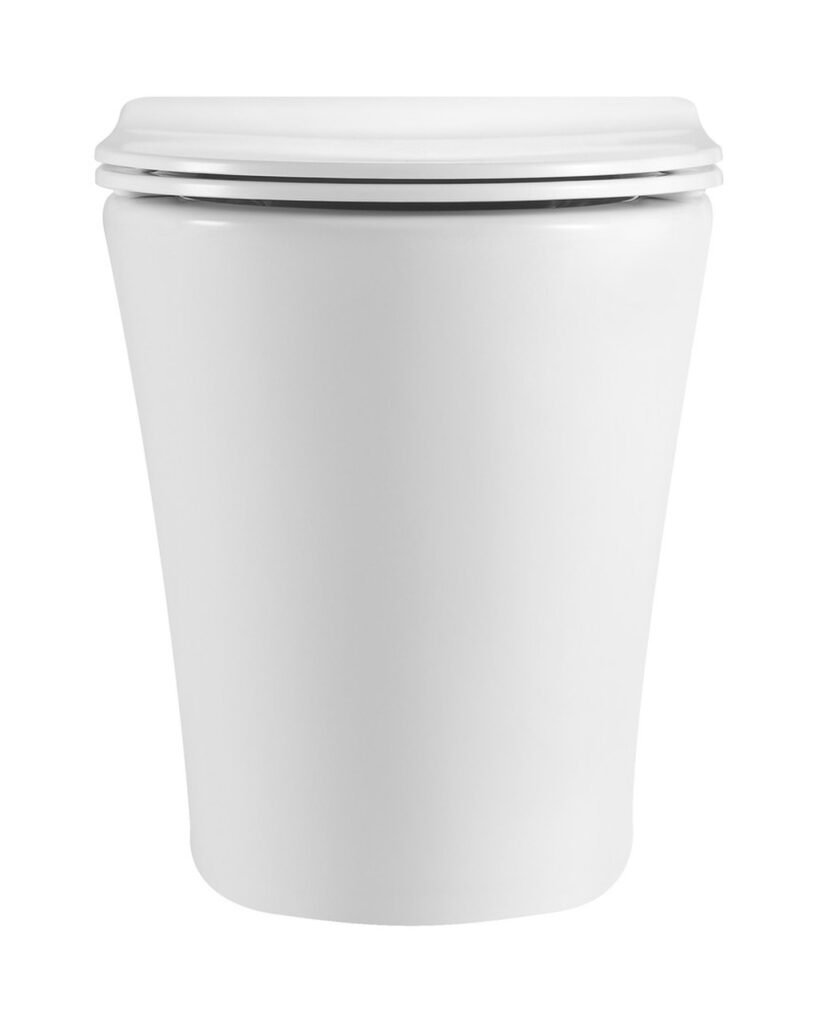
Sheng Ge produces wall-hung bowls in two profiles — models 2303 and 2381 — from a 51,000 m² Chaozhou facility with dedicated casting and firing lines. The CE certificate for wall-hung toilets is available for download on our Certifications page, and our export team will confirm frame compatibility and provide the spec sheet against your chosen cistern brand. Send the frame model and plate reference with your inquiry and we will do the matching before you order samples.
Related on this site
- 2303 — wall-hung bowl for project specification
- 2381 — the second wall-hung profile
- CE certificate for wall-hung toilets
- Specify Sheng Ge on a project