
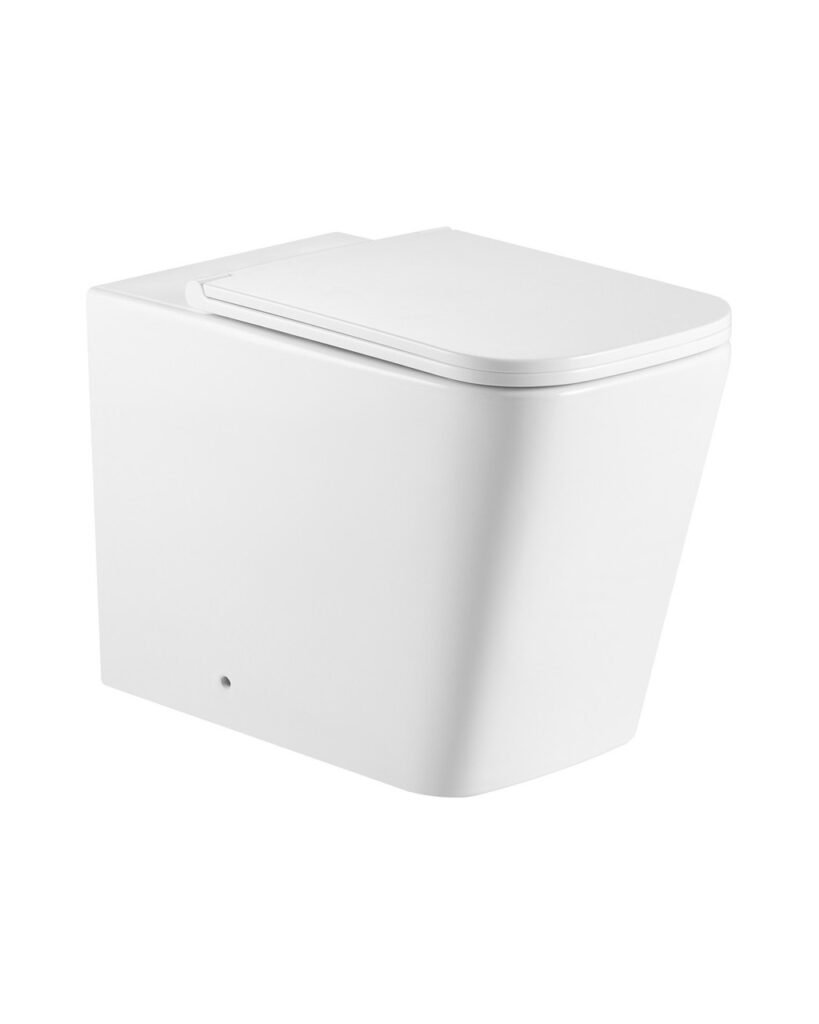
Ceramic does not count the way cartons do
A stock count on cartons of fast-moving goods is a counting exercise: open the location, count the units, compare to the system, move on. A stock count on ceramic is not that, because the thing being counted has two properties that cartons do not. It is fragile in a way that is invisible from the outside, and it is heavy in a way that discourages anybody from moving it twice.
Those two properties produce a specific failure. A count confirms the number and misses the condition, so a warehouse can be perfectly accurate on paper and full of stock that cannot be sold. Or the count is done properly, with every carton opened and inspected, and it takes so long that the warehouse stops shipping for a week, which nobody will authorise twice.
The way out is not to count harder. It is to separate the two questions — how many, and in what state — and to structure the count so that neither question requires the warehouse to stop. That is what the rest of this page is about.
Two numbers, not one
Every ceramic location has a quantity and a condition, and the condition has to be recorded as a quantity too, or it disappears. A pallet holding forty pieces of which three are chipped is not a pallet of forty. It is thirty-seven plus three, and if the record says forty, the three will be found by a customer.
So the count sheet needs more than a count column. It needs a column for pieces that are sound, a column for pieces that are damaged but identifiable as ours, and a column for pieces whose disposition is not yet decided. Those three columns are the minimum. Without the third, damaged stock either gets written off too early or sits in the good stock and gets picked.
Three zones, and stock that is allowed to be in none of them
The practical structure is three zones rather than one count. Stock awaiting inspection sits in the first, stock that has passed sits in the second, and stock that has failed or is disputed sits in the third. The zones are physical, marked, and separate, because the point of the structure is that a piece’s zone tells you its status without anybody looking it up.
The receiving and inspection zone is where a count actually happens, piece by piece, because that is the only moment when the goods are being handled anyway. Counting on receipt costs almost nothing extra: the carton is open, the piece is in somebody’s hands, and the check is a look and a tap rather than a separate operation.
The good stock zone is where a count should be cheap. It is counted by location and by pallet, verified by exception, and only opened where the record and the physical evidence disagree. The pending disposition zone is where the discipline shows, because that zone is the one everybody wants to skip. Stock in it has to be tagged, dated and owned by a named person, or it becomes permanent scenery.
The two arrows are the only movement allowed between zones, and the note underneath is the rule that makes the structure work: stock is counted where it sits, and tagged before it moves. A count that requires stock to be brought to a counting area has already failed, because the movement changes what is being measured and the bringing takes longer than the counting.
Counting condition: what to look at, in what order
Condition checking on a fired ceramic piece is quick if it is done in a fixed order, and unreliable if it is done by eye in whatever order occurs to the person holding it. The order that works moves from the outside in, because the outside is what a customer sees and the inside is what a complaint is about.
- The carton first. Crushed corners, water staining and a broken seal tell you what happened in transit before the piece is out of the box, and they are the evidence a claim needs.
- The glaze, under a light at an angle rather than straight on. Glaze faults that are invisible under direct light show immediately at a rake.
- The rim and the waterline, which are where chips concentrate, and which are the two places a customer inspects first.
- The base and the trapway on a pan, where a firing crack or a thin section will show, and where a fault is expensive because it is not cosmetic.
Where pieces are stacked, the count has to distinguish the top of the stack from the bottom, because the bottom carries the load. A stack that has been dropped shows its damage at the bottom course, and a count that inspects only what it can reach will report a clean pallet that is not clean.
The count that does not close the warehouse
A full physical inventory that stops dispatch is a once-a-year event at best, and most ceramic warehouses cannot afford even that. Cyclical counting is the alternative: a rolling programme in which a defined slice of the stock is counted each working period, so that every location is covered on a known cycle without anything stopping.
The slices have to be chosen with a reason. High-value models, models with a history of variance, and locations where picks and put-aways cross are counted more often than slow-moving stock in a stable location. That is not a statistical refinement; it is where the errors are, and counting them more often is simply following the evidence.
The mechanics that make it possible are modest. Freeze a location rather than the warehouse: nothing moves out of or into that bay while it is being counted, and everything else keeps running. Tag the bay while it is frozen so a picker does not undo the count. Count in pairs where the volume justifies it, with one person calling and one recording, because the commonest counting error is a transcription error rather than a miscount.
Finding mis-picks is half the point
A stock count that only confirms totals will miss the error that costs the most, which is the right quantity of the wrong model. On a range of 89 models with near-identical silhouettes, a mixed pick is easy to make and hard to see: two codes that differ by a suffix look the same in a carton and behave differently on site.
So the count has to read codes, not just quantities. The printed code on the carton, the code on the piece where it is marked, and the code in the location record should be the same, and where they are not, the discrepancy is worth more than the count itself. A location that consistently shows a mismatch is usually a labelling or put-away problem rather than a picking problem, and it will keep producing errors until the cause is fixed.
Mixed pallets deserve specific attention. When a pallet carries more than one model, the count has to break it down, because a single quantity on a mixed pallet is a number that cannot be reconciled to anything. This is also where a warehouse discovers that its put-away rule was never followed.
What to record, and what the record should change
A variance without a reason is a number that will recur. Every difference between the record and the physical count should carry a cause from a short closed list: breakage found, breakage caused during handling, mis-pick, mis-put-away, documentation error, or unexplained. The last category is the important one, because a rising count of unexplained variances is the signal that the process rather than the people is failing.
Disposition belongs in the same record. Damaged stock is either scrapped, held for a claim, or sold as a second at a defined status — and which of those it is has to be decided at the count, not deferred. Stock that is set aside without a decision is stock that gets picked six weeks later by somebody who did not know it was set aside.
The end of a count is not the reconciliation. It is the two or three changes to the process that the count justified: a different put-away rule, a second check on a particular model, a repack standard for a carton that keeps arriving crushed. A count that produces a corrected number and no corrected practice will produce the same variance next cycle.
What our own stock discipline looks like
The same logic runs at the Chaozhou plant, where casting, glazing, firing and QC sit on one 51,000 m² site with our own tunnel kiln. Finished stock is counted by location and inspected on receipt, and the batch reference travels with the pallet from firing through to the carton, which is what makes a count reconcilable to production rather than only to a spreadsheet.
For buyers, the terms that interact with stock are stated plainly. White-body orders carry no minimum quantity; samples are free; payment is by TT or LC; production runs 30 to 40 days; the ceramic body carries a lifetime warranty. Colour and matt finishes carry a minimum of 30 per model, which is the reason those lines are held to order rather than to stock.
Frequently asked questions
How often should ceramic stock be counted?
On a rolling cycle rather than in one annual event, with high-value and problem models counted more often than stable slow-movers. The cycle matters less than the coverage: every location counted within a known period, with the reason for each variance recorded.
Can a stock count be done without stopping dispatch?
Yes, if the freeze is applied to a location rather than to the warehouse. One bay is frozen and tagged while it is counted, everything else continues, and the bay is released when the count is agreed. The constraint is a single location, not the building.
Why count damaged pieces separately?
Because a single quantity hides them. A pallet of forty with three chipped pieces is thirty-seven plus three, and if the record says forty, the three will eventually be picked and shipped. Separating them also supports a breakage claim, which needs a count as much as it needs photographs.
What is the commonest cause of variance?
Mis-put-away rather than mis-pick, in our experience of this category. Stock is placed in the right bay with the wrong code recorded, so the quantity is right somewhere and wrong everywhere it is looked for. Reading the printed code during the count is what exposes it.
Should mixed pallets be broken down in the count?
Always. A single quantity on a mixed pallet reconciles to nothing and cannot be picked from accurately. Breaking it down by model is slower on the day and is the only version of the number that a warehouse can actually work with.
Does a stock count replace an arrival inspection?
No. Arrival inspection is tied to a consignment, a carrier and a claim window, and it has to be done when the container is opened. A stock count is about the accuracy of the warehouse, and it happens later, with different evidence requirements.
Related on this site
Documents and certificates
Related reading
- Storage and showroom handling
- Container arrival inspection
- The Declaration of Conformity, Line by Line