
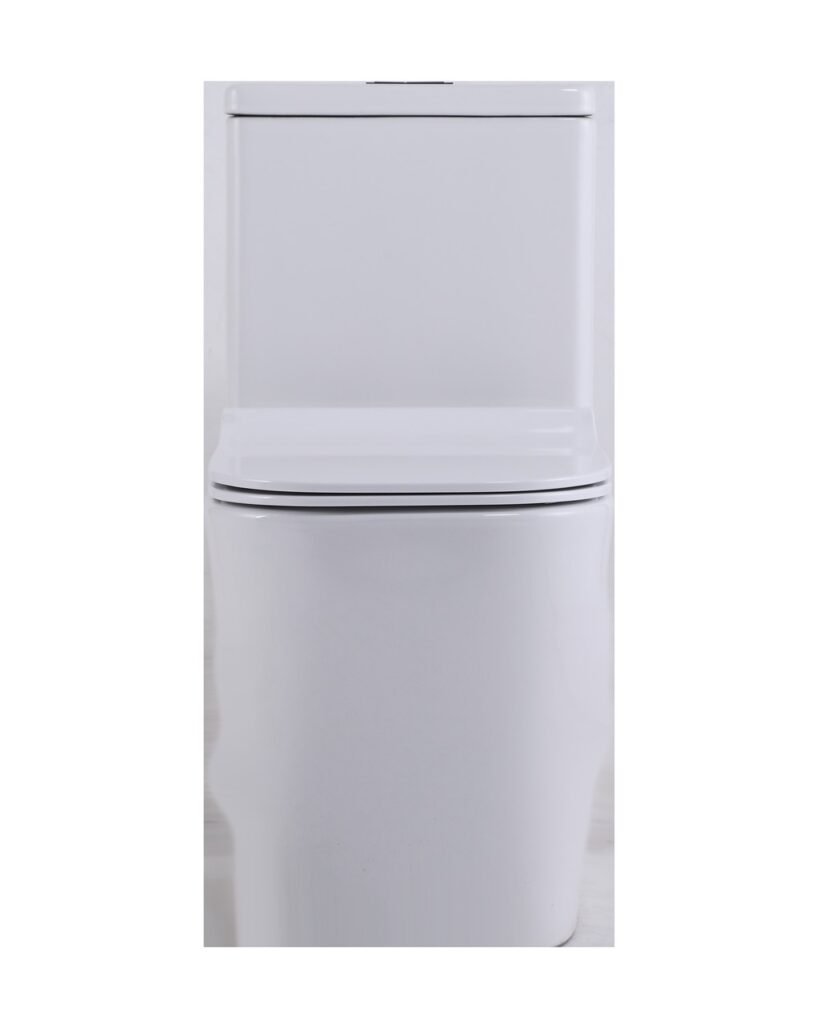
One heading, two subheadings
Ceramic sanitaryware is classified in heading 6910 of the Harmonized System. The heading is broad, and it is split into two subheadings that matter commercially: 6910.10 for porcelain or china, and 6910.90 for other ceramic material. Everything else in a classification discussion is an argument about which of those two a given article belongs to.
That sounds like paperwork. It is not. The subheading selects a line in the importing country’s tariff, and a tariff line carries the rate of duty and, often, the conditions of entry. Two fixtures that look identical in a catalogue can land on different lines because of what their body is made of, and the difference does not show up until somebody reads the entry.
This article sets out what 6910 covers, how the split works, where it gets difficult, and who is legally responsible for the answer. It deliberately contains no rates: a rate belongs to a country’s tariff at a point in time, and anything quoted here would be wrong somewhere.
What 6910 covers
The heading covers ceramic sanitary fixtures — the plumbing fittings that are made of fired clay and installed to receive or dispose of water. In practical terms, the list reads like a bathroom schedule:
- Sinks and washbasins, including pedestals supplied as part of a basin arrangement.
- Baths.
- Bidets.
- Water closet pans.
- Flushing cisterns.
- Urinals.
- Other similar sanitary fixtures of ceramic.
Note what the list is organised around: function in a building’s sanitary installation. A pan is there because it is a pan, not because of how it flushes or how it is mounted. Floor-standing, back-to-wall and wall-hung pans all sit inside the same heading, and the mounting arrangement does not move an article out of it.
Note also what is not there. Ceramic tiles are not sanitaryware. Ceramic tableware is not sanitaryware. A ceramic soap dish may be a bathroom accessory and still not be a sanitary fixture. The heading is about fixtures in a water installation, and the accessory shelf of a catalogue is generally somewhere else in the tariff.
The split: 6910.10 and 6910.90
Within the heading, the division is by material quality rather than by product type. Subheading 6910.10 covers articles of porcelain or china. Subheading 6910.90 covers the rest of the ceramic articles in the heading — stoneware, earthenware, and other bodies that are ceramic but not porcelain or china in the tariff sense.
The terminology is where most of the difficulty lives, because the trade and the tariff do not use the same words for the same things. “Vitreous china” is a description of a fired body with very low water absorption; whether a given body is “porcelain or china” for classification purposes is a question about the tariff’s own understanding of those terms, which is not identical to a factory’s production terminology.
That is why the answer should never be inferred from a marketing phrase. “Premium ceramic”, “fine ceramic” and “high-grade body” describe nothing that a tariff line can be selected from. What a classification needs is the body, the material composition and, where the tariff asks for it, evidence from a test.
Why the subheading moves more than the paperwork
Three things follow the subheading, and only one of them is administrative.
The first is the rate of duty. It is set by the importing country’s tariff schedule, and it is attached to the line. Move the line and the rate moves; the goods do not change, the obligation does.
The second is the conditions of entry. A tariff line often carries requirements beyond the rate — a conformity assessment route, a labelling condition, a restriction, a licensing step. These are not duties and they are not visible in a price comparison, but they decide whether the container is released.
The third is the document set. The code appears on the invoice, the packing list, the certificate of origin and the customs declaration, and it has to be the same code everywhere. A code that changes between documents is one of the fastest ways to stop a release, because it converts a routine entry into a query about which description is true.
Where classification is genuinely difficult
Most entries are not difficult. A white vitreous china pan is a pan, and the question is which material line it belongs to. Difficulty arrives in four familiar shapes.
- A body that sits near the boundary between porcelain and other ceramic, where the factory’s term and the tariff’s term do not line up cleanly.
- An article that combines materials — a ceramic basin with a metal frame, or a ceramic pan supplied with a plastic seat and a metal hinge set.
- A suite or set presented together, where the question is whether the set is one article or several.
- A product described by its function in one market and by its material in another, so that the same goods attract different descriptions on different invoices.
Note that none of these are resolved by looking harder at a photograph. They are resolved by reading the tariff text for the destination, and where the text is ambiguous, by asking the customs authority that will apply it.
Suites, sets and mixed consignments
A matched suite sold as one item is still, for classification, usually a group of articles. The pan, the cistern, the seat and the fittings each have their own character, and the set is described in the documents as what it contains rather than as a single unnamed product.
This matters most in a mixed container. A wholesale order is typically many models, several finishes and a range of product types, and a single line on an invoice saying “sanitaryware” with one code is a description that cannot be checked against the load. The packing list should carry the model and the quantity, and the invoice should carry the classification for each distinct article or group.
Where a set is packaged as a retail unit, the presentation itself can affect the answer in some jurisdictions, which is another reason to describe what is actually in the carton rather than what the catalogue calls it.
Who owns the classification decision
The legal responsibility for a customs declaration sits with the importer of record, and the practical work is usually done by a licensed broker in the destination country. The exporter supplies the facts: what the goods are, what they are made of, how they are presented.
Where the answer is uncertain or commercially significant, the route is a written ruling from the customs authority of the importing country, obtained before the goods move. Several jurisdictions offer some form of advance or binding ruling, and a ruling is worth considerably more than an opinion, because it binds the administration that issued it rather than the party that asked for it.
An informal opinion from a forwarder or a supplier is not a ruling. It can be right, and it is still not something to build a landed-cost calculation on.
What we will and will not put in writing
We will state, on the commercial invoice and the packing list, what the goods are: the model, the product type, the body material and, where the range supports it, the fact that the body is vitreous china with a published absorption result. Every model in our range is vitreous china, and our AS 1976 test report records water absorption of 0.14%, which is a fact about the body rather than a classification.
We will not state a duty rate, and we will not tell a buyer which line their country will apply. The rate belongs to the destination tariff; the classification belongs to the importer and their broker. What we can do is supply the technical description and the documents that a broker needs in order to make the call quickly, and answer questions about the body without inventing a legal conclusion.
That division is not a way of avoiding the question. It is the division that produces a defensible entry: the party with the facts supplies the facts, the party with the liability makes the declaration, and the authority that will apply the tariff gives the ruling when one is needed.
Frequently asked questions
Is a toilet classified under 6910?
Yes. Water closet pans are named in heading 6910, together with flushing cisterns, washbasins, pedestals, baths, bidets, urinals and similar ceramic sanitary fixtures. The mounting arrangement does not move the article out of the heading; the body material decides the subheading.
What separates 6910.10 from 6910.90?
Material. 6910.10 covers articles of porcelain or china; 6910.90 covers other ceramic sanitaryware in the heading. The product types overlap almost completely, so the same pan shape can sit in either subheading depending on the body it is made from.
Does the HS code set the duty rate?
The code selects the tariff line, and the line carries the rate. The rate itself is set by the importing country’s schedule at the time of entry. That is why we do not quote rates: the answer is a destination question, not an origin one.
Can you put an HS code on our invoice?
We state the product description and the material accurately, and we can show the code used on previous shipments to the same market. The declaration itself is made by the importer of record through their broker, and where the line is uncertain, a written ruling from that customs authority is the reliable answer.
How is a matched suite classified?
Usually as the articles it contains rather than as one unnamed product. A pan, a cistern, a seat and a fittings set each have their own character. Describe them in the packing list and the invoice so the entry can be checked against the load.
What if customs disagrees with the code?
The entry is amended, and the question becomes whether duty was underpaid or overpaid. The defence is a contemporaneous technical description and, where it exists, a written ruling. That is why the description matters more than the code on any single document.
Related on this site
Documents and certificates
Related reading
- What a quotation should itemise
- Reading a sanitaryware spec sheet
- Port of Loading: What to Confirm on the Booking