
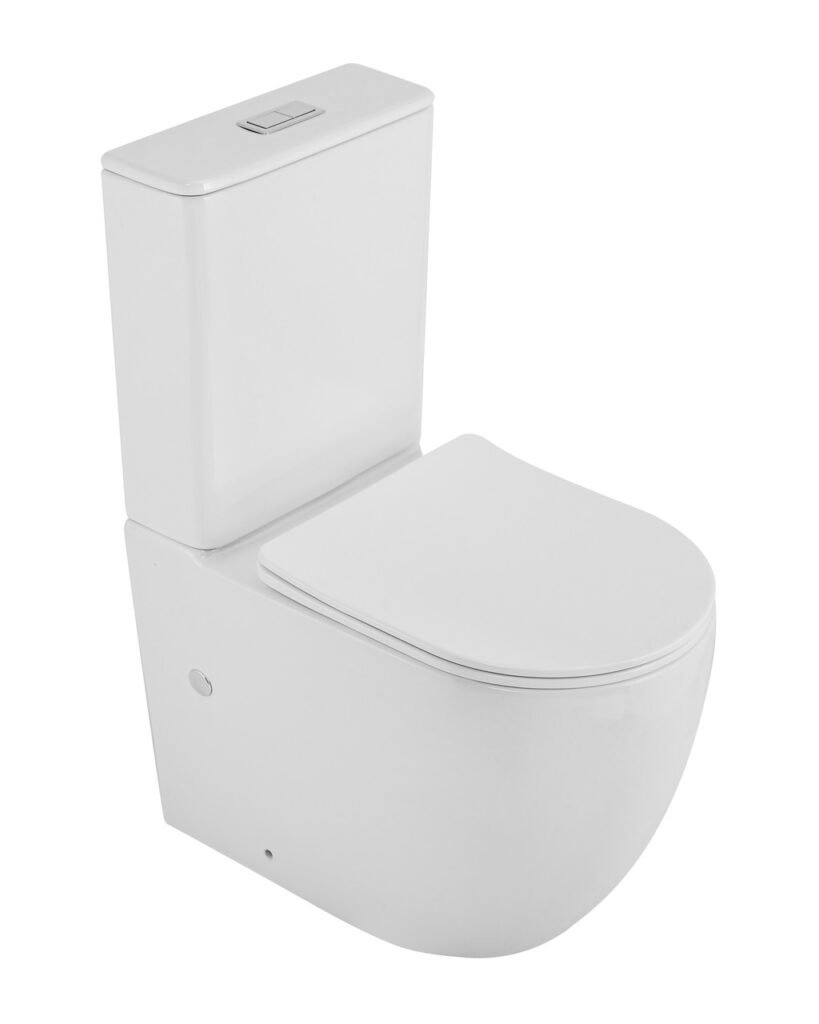
Water on the outside is usually not a leak
A cistern with a film of water on its outer face, or a row of droplets along the bottom edge, reads as a leak. It is the natural conclusion: water is where water should not be. But a cistern is a cold vessel in a warm room, and a cold vessel in a warm room collects water from the air. In a large share of the cases that get reported as leaks, nothing is escaping from the cistern at all — the water came out of the room’s air and settled on the coldest surface available.
The distinction matters because the two problems have different owners. A leak is a joint, a seal or a crack, and it belongs to the plumbing or the factory. Condensation is a room condition, and it belongs to the building — its ventilation, its humidity and how cold the water arriving in the cistern is. Treating condensation as a leak means replacing parts that were never faulty; treating a leak as condensation means water quietly damaging a floor.
What condensation actually is
Air holds water vapour, and how much it can hold depends on its temperature. Warm air can carry more than cool air. When warm, moist air meets a surface that is cooler than the air, the air next to that surface is chilled, it can no longer hold the same amount of vapour, and the excess comes out as liquid water on the surface. That surface is called the dew point condition, and any surface below it will collect water.
A cistern is an efficient collector of that water for two reasons. It is filled with water arriving from the mains, which is typically much colder than the room, especially in winter and especially where the supply runs underground or through an unheated space. And ceramic conducts that cold through the wall to the outer face very effectively, so the whole outside of the cistern sits close to the temperature of the water inside it. A full cistern after a flush is at its coldest, which is why the droplets often appear just after use.
Telling it apart from a leak
The two produce different evidence, and the evidence is available without tools. Four observations usually settle it:
- Where the water is. Condensation forms a film or a set of droplets across a face, often the whole face. A leak starts at a joint, a seal or a fixing and spreads from that point.
- When it appears. Condensation follows the room: worse on cold mornings, after showers, when the heating goes on, when the windows are shut. A leak follows the water: worse after a flush, or continuously.
- What it leaves. Condensation leaves no tide mark and no mineral trail. A slow leak leaves a stain that grows and a crust where water has been evaporating for weeks.
- What a wipe does. Dry the face and leave it. Condensation returns in a pattern that follows the room’s humidity. A leak reappears at the same point regardless of the room.
If the answer is still ambiguous, the next step is a joint check rather than a part replacement: the inlet connection, the flush valve seal, the outlet and the cistern-to-pan joint. Those are the four places water can actually leave a cistern, and each has a specific way of showing it. Water on a face with none of them wet is not coming from inside.
The cold feed, and why it points at plumbing
Condensation on a cistern is not random. It concentrates where the water is coldest, and the water is coldest when it has just arrived. Mains supply temperature follows the ground, so it is at its lowest in the season when rooms are heated hardest — which is exactly the combination that produces the complaint. A long uninsulated run through a cold roof space or a shaded service duct makes it worse.
This is the one part of the problem that does belong to the plumbing, and it is worth saying clearly: the cistern is behaving as a cold body should, and the cold is being delivered to it. Where a building has a recurring problem on one cistern and not on others, the difference is usually in the feed route, the room, or how often the fixture is used, rather than in the ceramic.
Why a vitreous china body is not the cause
The instinct that a ceramic cistern “sweats” because it is porous is understandable and wrong for our range. Water passing through a body would show as a damp patch that follows the water level and grows with time, and it would leave a stain. That is a different phenomenon from a film of condensation on a dry, impermeable face.
The number that answers this is water absorption. Our body is tested to AS 1976 and records 0.14%, on a report that is published rather than held back. A body at that level of density is not a route for water through a wall. Every model in the range — 89 of them — is vitreous china, fired in our own tunnel kiln at Chaozhou, with casting, glazing, firing and QC in the same plant since 2021. The ceramic is the cold surface; it is not the source.
Where the water actually comes from
The drawing below puts the two sides of the wall in one section: cold water on the inside, moist room air on the outside, and the ceramic between them.
Read the drawing as a sequence rather than a picture. Cold water from the feed holds the inner face cold. The ceramic wall conducts that cold to the outer face, so the outer face is close to the water temperature rather than the room temperature. Moist room air reaches that cold face, is chilled against it, and gives up water. The droplets therefore appear on the outside of a wall that is doing exactly what a dense, non-absorbent ceramic should do.
The room rather than the fixture, and what to do about it
If condensation is the diagnosis, the useful work is in the room. Bathrooms are the wettest rooms in a building and often the least ventilated. A shower puts a large amount of moisture into the air; a closed window and a failed extract keep it there; drying laundry indoors adds more. The cistern is simply the coldest thing in the room, so it is where the moisture lands — the same reason a cold water pipe or a single-glazed window fogs first.
The order of investigation that saves the most money is therefore: check the room’s ventilation and moisture sources, then the water temperature arriving at the cistern, then the fixture. A cistern that condensates in one bathroom and not in another, in the same building and on the same supply, is telling you about the rooms rather than about the product.
The measures that work are cumulative, and the cheapest come first. Improving extract and ventilation reduces the moisture available to condense. Keeping the room warmer, or reducing the temperature difference between the water and the room, reduces the driving force. Insulating a long cold feed run reduces how cold the water arrives. Where a market uses a lined or insulated cistern, that is a product decision the buyer makes for the project; it is not something we supply, and it changes the surface temperature rather than the humidity.
What does not work is sealing the cistern more tightly. The water is not coming from inside, so no amount of sealant on a joint will stop it. Buyers who have spent money on replacement seals for a condensation problem usually describe the same result: the water came back, because the room never changed.
What a supplier can and cannot say
We can confirm what the ceramic is, what its absorption figure is, and that the body is not a route for water through the wall. We can also confirm whether a specific cistern has a joint or a fitting that could be the source, from the drawing for that model. What we cannot do is diagnose a room from a photograph. Condensation is a building performance question, and the people who can answer it are the installer, the building manager or a ventilation specialist — not the factory that fired the cistern.
If a claim is being considered, the honest sequence is to eliminate the four water paths first, then look at the room. If the four are dry and the water still appears on a face, the report should say so in those terms, with the room conditions recorded. That is a report a supplier can answer, and it is also the report that gets a building’s ventilation fixed.
Frequently asked questions
Is water on the outside of a cistern a leak?
Often not. Condensation forms when moist room air meets a cold surface, and a cistern filled with cold mains water is the coldest surface in most bathrooms. A film across a face with dry joints points to condensation; water starting at one joint points to a leak.
Why does it only happen in cold weather?
Because the two conditions peak together. Mains water is coldest after a cold season, and rooms are heated and closed up at the same time, so the temperature difference between the water and the air is at its largest. That difference is what drives condensation.
Can water come through the ceramic body?
Not in a vitreous china body at our published figure. The AS 1976 test records water absorption of 0.14%, which is a dense, closed body. Water passing through ceramic would leave a damp patch that follows the level and stains; condensation sits on the surface and dries.
Does the lid make condensation worse?
A lid changes where the cold surface is exposed, not how much moisture the air holds. It may hide the droplets on the top face while they continue on the sides. The underlying condition is still the room’s humidity and the water temperature.
What is the first thing to try?
Dry the face and watch what happens over a day, then check the four water paths — inlet connection, flush valve seal, outlet and cistern joint — before changing any part. If all four are dry, the next step is ventilation and room temperature, not a new cistern.
Would a different cistern solve it?
Only if it changes the surface temperature, for example a lined or insulated design used in some markets. A different ceramic cistern of the same type will condensate in the same room, because the room is what is supplying the moisture.
Related on this site
Documents and certificates
Related reading
- Concealed and exposed cisterns, and what each hides
- Water absorption and firing classes explained
- Replacing a Cistern Inlet Valve