
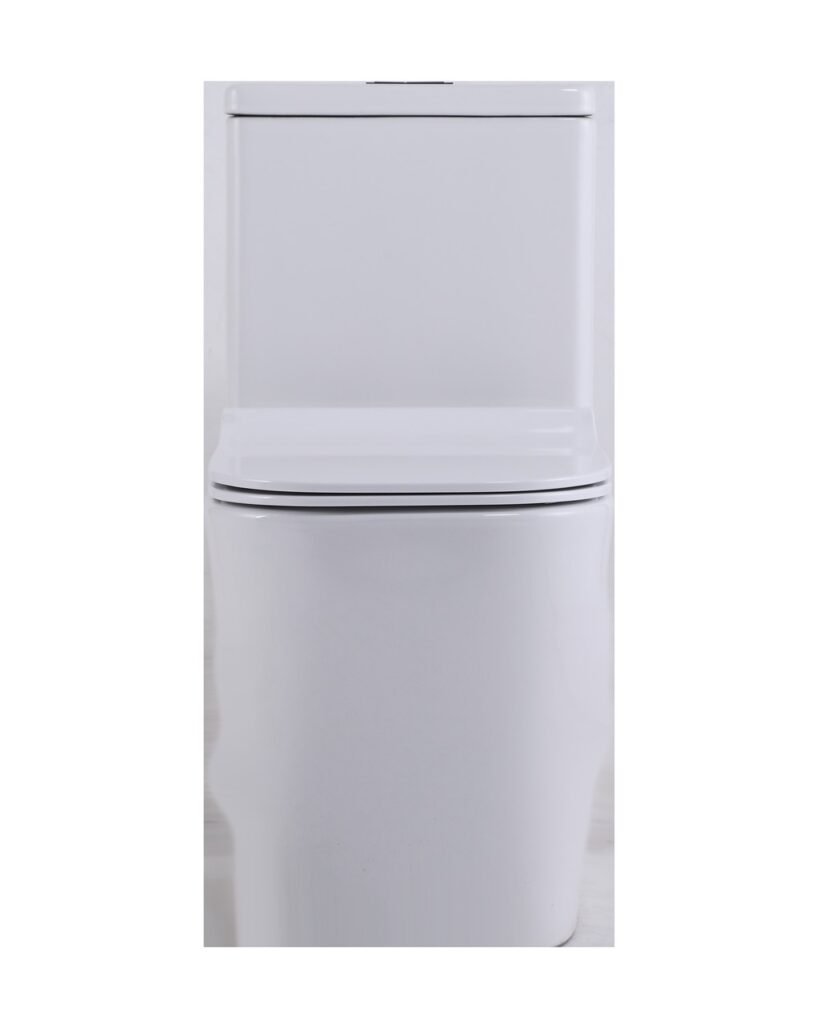
A pan that moves is a symptom, not a diagnosis
The complaint arrives with a video: a fitted pan, a hand on the rim, and a movement of a few millimetres as the bowl tips. Sometimes there is a creak. The conclusion in the email is usually already written — the base is warped — and sometimes that is right. But a pan that rocks is a symptom with four common explanations, and only one of them is a ceramic problem. Replacing a pan before the other three have been eliminated is the most expensive way to solve a site issue.
It is worth being clear about what “rocking” means mechanically. The pan is a rigid shell. It can only sit still if it bears on a surface that is itself stable, at enough points, without anything holding it up in the middle. Movement means one of those conditions is not met: the floor is not flat, something is trapped under the base, the fixings are stressing the shell instead of holding it down, or the base itself is not flat. Each leaves a different signature, and each is tested a different way.
The floor: the first thing to rule out
Screed is not flat, and tiling does not make it flatter. A tile laid slightly proud at one corner, a repair patch that was not levelled, a floor that falls towards a drain — any of these leaves a high spot under a base that is designed to sit on a plane. A pan placed on a high spot bears on that one point and tips on it. The movement feels exactly like a warped base, and it disappears the moment the pan is set down on a flat bench.
The test costs nothing and should be done before anything is fixed: set the pan in position without sealant, without the outlet connection made good, and without the fixings tightened. Press alternate corners and see whether it moves. If it rocks on a bare floor, take it off and put a straight edge across the floor in both directions, and across the diagonals. Whoever is fitting the pan can do this in a few minutes, and the result decides everything that follows.
The outlet: when the connection holds the pan up
The second cause sits under the middle of the base and is easy to miss, because it is hidden once the pan is down. A wax ring, a rubber seal or a flexible connector that stands too tall, or a soil pipe that finishes above the floor finish, will hold the pan off the ground. The pan then bears on the connection rather than on the floor, and every load on the rim is transferred into the outlet — which is both a rocking complaint and a future leak.
The signature is specific: the pan moves in every direction rather than tipping across one diagonal, and the movement does not change when weight is applied to a corner. If that is what the installer sees, the outlet is the first place to look, not the base. The sequence matters — check the pan on a bare floor first, then check the outlet height against the base recess, then make the connection.
The fixings: holding down versus pulling out of shape
Fixings are supposed to hold a pan that already sits still. When they are used to pull a pan down onto an uneven floor, they do the opposite of their job. A fixing tightened hard at one corner while the opposite corner is in the air bends the base and loads the ceramic at a point it was never designed to carry. The pan may end up apparently stable and internally stressed, which is worse than a visible rock, because the failure arrives later as a crack from the fixing hole.
Two details belong to the installer here. The first is that fixing holes in ceramic are clearance holes, not clamp points; the load should be spread by the washer or plate the fixing is designed with, not concentrated on the rim of the hole. The second is sequence: bring the pan down evenly, check for movement at each stage, and stop tightening when the base is in contact. If the base is in contact everywhere and the pan still moves, tightening further is not the answer — something else is wrong.
The base itself: the one that belongs to the supplier
The fourth cause is the ceramic. A base that comes out of the kiln out of flat will rock on any floor, however well that floor is laid. The mechanism is straightforward: a large flat face fired at high temperature can warp as it cools, and a base is the largest flat face on the piece. It is a known behaviour in the process, controlled by body formulation, by how the piece is supported in the kiln, and by the cooling curve — and inspected before packing, because a warped base is one of the few defects that cannot be corrected after firing.
This is the cause that belongs to the factory, and it is the one a buyer should insist on testing properly rather than assuming. The test is the same one that clears the floor: the pan on a flat bench, pressed at alternate corners, with the base visible. A pan that rocks on a certified flat surface has a base problem. A pan that sits dead flat on the bench and rocks on the floor has a floor or outlet problem, and no replacement pan will fix it.
The four contact points to look at
Almost every rocking complaint can be traced by looking at where the base actually touches. The drawing below shows the underside of a pan base as it sits against the floor, with the four bearing areas marked.
Three readings of the drawing are useful on site. The base rim is the bearing face, so the four corner areas are where contact should be even. The recessed underside must stay clear of the floor and of the outlet, because anything touching it lifts the rim off. And a pan bearing at only two opposite corners is the classic rocking signature, because it tips across the other diagonal. Note which corners are bearing and which are not before touching a fixing; that pattern is the evidence.
Which of the four the supplier answers for
Be blunt about the division, because vague goodwill helps nobody. If the base is out of flat, that is ours: the ceramic carries a lifetime warranty, and a warped base is a manufacturing condition rather than wear. If the floor is not flat under the pan, that is the building. If the outlet stands proud, that is the plumbing installation. If the fixings were over-tightened, that is the installation too.
What a supplier owes in all four cases is the same thing: an answer that says which one it is, based on the pan rather than on the email. A factory that has fired the piece can tell you whether the base is flat. It cannot tell you whether your floor is, and it should not pretend otherwise.
What to send when the base is the problem
If the bench test shows movement, the claim needs four things and no more: the model code, the batch code, a photograph of the pan on a flat surface with a straight edge across the base, and the number of pieces affected out of the quantity inspected. That last item turns a complaint into a rate, and a rate is what a factory can act on — it points at a kiln position or a mould rather than at a single carton.
Keep the pan. A base flatness judgement made from a photograph is a guess; the same judgement made with the piece on a bench is a measurement, and it is the difference between a replacement and an argument. Where a site has a mix of causes — one pan on a high tile, another genuinely warped — separating them early is what keeps a whole container from being condemned for one floor.
Frequently asked questions
Is a rocking pan always a manufacturing fault?
No. Of the four common causes — an uneven floor, an outlet holding the pan up, over-tightened fixings and an out-of-flat base — only the last is a ceramic fault. The quick separation is to set the pan on a flat bench and press alternate corners.
Can a rocking pan be fixed without removing it?
Sometimes, if the cause is a fixing pulling the base down at one corner, or a connection standing proud. Those are corrected by redoing the connection and re-setting the pan. If the base itself is out of flat, no amount of packing or sealant makes it right, and the pan should be replaced.
How do I check the floor before fitting?
Put a straight edge across the floor in both directions and across the diagonals, then set the pan down dry, with no sealant and no fixings, and press alternate corners. Any movement at that stage is the floor, the outlet or the base — and the bench test separates the last one.
Does a rocking pan leak?
It can. Movement works the outlet connection, and a seal that is being flexed is a seal that will eventually fail. That is the reason a rock is worth correcting even when the pan is not being used heavily: the leak it causes appears at the floor, not at the pan.
Why do fixings sometimes crack the ceramic?
Because a fixing tightened to pull a pan down loads the ceramic at the edge of the hole instead of spreading load across the base. The crack usually starts at the fixing hole and runs with the stress. Even tightening, with the washer the fixing was designed for, is what prevents it.
What evidence does a base claim need?
The model code, the batch code, a photograph of the pan on a flat surface with a straight edge across the base, and the number of affected pieces against the quantity inspected. Keep the pan available until the claim is answered.
Related on this site
Documents and certificates
Related reading
- Trapway and rough-in, and why the outlet sits where it does
- What each published dimension decides on site
- Pinholes and Specks: Reading Glaze Defects