
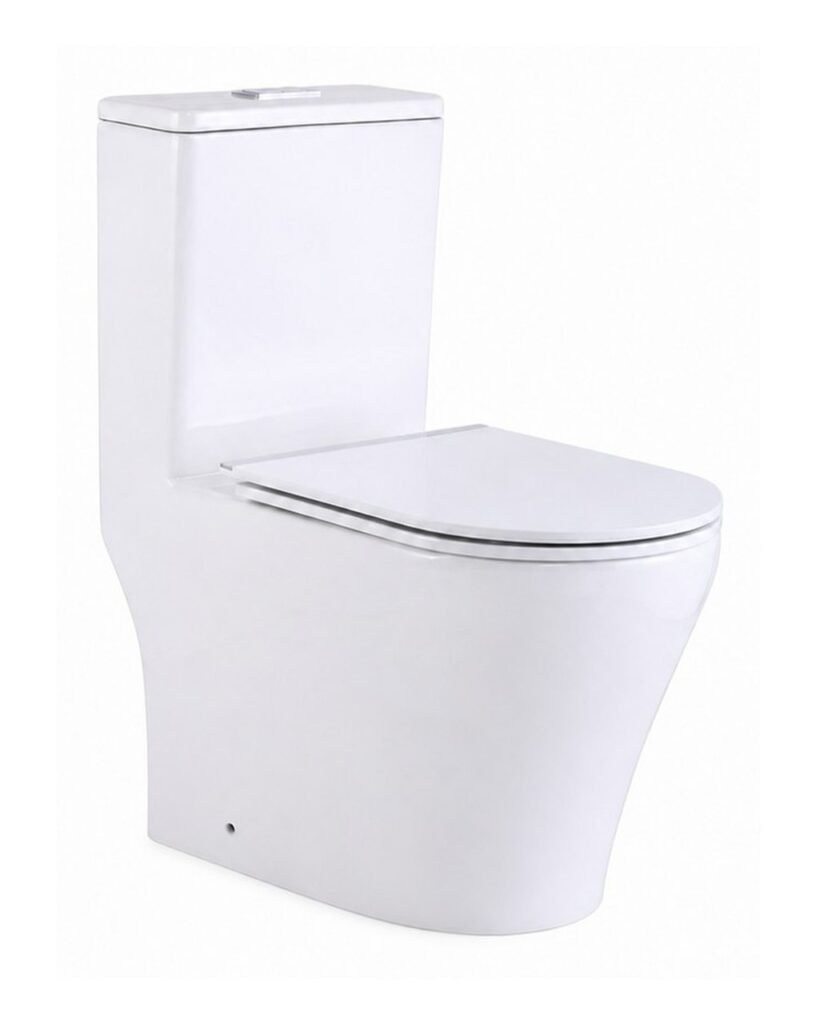
Registration happens before the container, not after it
The United Arab Emirates handles product conformity as a pre-import step. For products that fall under a regulated category, registration under the ECAS or EQM scheme has to be completed before the goods are imported. It is not a clearance activity that happens at the port once the container has landed, and it is not something that can be caught up on while the goods sit in a bonded warehouse.
That ordering is the whole subject of this article. When registration is treated as a document to produce at the end, the party who discovers the omission is the importer, at the moment when the least can be done about it. When it is treated as a step before the purchase order, the same requirement costs a conversation.
Who administers it
The competent authority is MoIAT, the Ministry of Industry and Advanced Technology. The standards body, ESMA, has been brought under it, so the standards system and the conformity system are administered within one ministry rather than two. For a supplier or importer, that means the list of regulated products and the schemes that apply to them are published in one place, by one authority.
Practical consequence: the reference point for what applies is MoIAT’s own material, not a consultant’s recollection and not a forum post from three years ago. Schemes are revised, product lists are revised, and the only version worth working from is the current one.
Two schemes, and a question that has to come first
ECAS and EQM are two different conformity routes under the same ministry. Which one applies depends on the product and on how it is classified. For sanitary ware, the honest position is that the question of whether the category falls under a mandatory scheme at all has to be checked against MoIAT’s list of regulated products before anyone quotes a delivery date.
We are deliberately not going to tell you which way that answer falls. Not because the answer is secret, but because it is published by the authority and can change, and a blog post is the wrong place to freeze it. The instruction is simple: take your product description and HS classification, check them against MoIAT’s regulated products list, and confirm the applicable scheme — ECAS, EQM, or none — with the ministry or with a registration consultant who works with it. Do that before the quotation, not after.
What we will not do is write “sanitary ware requires ECAS” as though it were settled. That sentence is repeated across supplier websites, and repeating it would be borrowing certainty we have not verified. If your consultant tells you a scheme applies, we will supply the technical documents the file needs. If they tell you none applies, get that in writing, because the answer will be asked for again at the border.
Why the sequence matters to a quote
A manufacturing quotation covers goods, packing, and delivery to a port. It does not cover a registration that has not been applied for, and a supplier who quotes a delivery date without asking about the scheme is quoting a date that may not survive the first regulatory step.
For the buyer the arithmetic is straightforward. If registration is required and has not started, the container’s departure is not the constraint on the project, the registration is. Lead time from our plant is 30 to 40 days, and a project that plans around that figure while a pre-import step is unaddressed has planned around the wrong number.
There is a second, quieter cost. Registration files ask for product documents: test reports, drawings, declarations, and sometimes evidence about the manufacturing site. Gathering those takes correspondence with a factory that may be in a different time zone. Starting that correspondence before the order is placed turns a fortnight of emails into an attachment.
What registration does not do
An entry on a conformity register is not a statement that the product suits a particular project, and it is not a statement that the installation will be accepted. It addresses the question of whether the product may be imported and placed on the market. Everything a project specifies on top of that — the flush performance a consultant has written into the specification, the outlet arrangement, the seat, the finish — remains a separate conversation.
It is also tied to the entity and the information in the file. Change the importer, change the brand, change the model, and the paperwork has to be looked at again rather than assumed to carry over. That is worth thinking about before a private label project is scoped, because a label change can move a product out of the scope of a file that was assembled for something else.
What we supply for a UAE file
We are a manufacturer, so what we can give you is the product evidence a registration file is built from.
- Technical drawings for the model, so the description in the file matches the article supplied.
- The AS 1976 test report recording water absorption of 0.14%, which is published rather than held back.
- CE marking documents on our wall-hung models, where the European file is relevant to the submission.
- ISO 9001 for the plant at Chaozhou, which answers the site questions a file often asks.
- Two SGS VOC reports, where emissions documentation is part of the requirement.
Documents we hold but do not publish, including regional approvals outside the six we make public, are provided as certificate documents on request. There is no download link and no PDF on the site, and we would rather say that than imply a file exists behind a page that does not have one.
Settle these before you price
Three questions, all answerable before a quotation is issued, and each one capable of changing the programme.
- Is the product category on MoIAT’s current list of regulated products, and under which scheme?
- Who applies for registration, and in whose name is it issued?
- Which documents does the file require from the manufacturer, in which language, and with what legalisation?
The third one catches people out. A document that is correct and in the wrong language, or unstamped when a stamp is required, is a document that has to be produced again from the other side of the world. Ask what the format requirement is at the same time as asking which document is needed.
Two more questions belong to the commercial structure rather than the technical file: what happens to the registration if the importer changes, and what happens to it if the model is rebranded for a project. Both are answerable by the consultant handling the file, and both are cheaper to answer before the goods are manufactured than after.
The one sentence to keep
Confirm the applicable scheme against MoIAT’s list of regulated products before you quote, and put the answer in writing. Everything else in this article is detail hanging on that sentence. The details matter, but they are recoverable. A sequence that runs the wrong way round is not.
If you already know which scheme applies and have the document list, send it with the model codes and we will work through it in one pass. If you do not, say so at enquiry stage and we will tell you what we can supply while you find out.
Frequently asked questions
Does sanitary ware need ECAS registration in the UAE?
That has to be confirmed against MoIAT’s current list of regulated products rather than assumed in either direction. Take the product description and classification to the ministry or a registration consultant, establish which scheme applies, and put the answer in writing before you quote a delivery date.
Can registration be done after the goods arrive?
No. For products under a regulated scheme, registration is a pre-import step under ECAS or EQM. It is completed before import, which means before the container is booked rather than while it waits at a port. Treating it as a clearance task moves the cost onto the importer.
Who is the competent authority?
MoIAT, the Ministry of Industry and Advanced Technology, administers product conformity, with the ESMA standards system now operating under it. The regulated product list and the scheme descriptions published by the ministry are the reference point for what applies to a given product category.
What is the difference between ECAS and EQM?
They are two conformity routes administered under the same ministry, and which one applies depends on the product and its classification. Rather than summarise the difference second-hand, check the scheme description published by MoIAT for your category, or ask the consultant who will submit the file.
Which documents can you provide for a registration file?
Drawings, the AS 1976 test report recording 0.14% water absorption, CE documentation on wall-hung models, ISO 9001 for the plant, and two SGS VOC reports. Anything else we hold is provided as certificate documents on request rather than as a download, and we will confirm per model.
Does registering a product cover a private label version?
Do not assume it does. A registration is tied to the information in the file, and a change of brand, model code or importer can put a different product in front of the reviewer. Raise the labelling plan with whoever holds the registration before the order, not after the cartons are printed.
Related on this site
Documents and certificates
- Certificates and the markets each one covers
- Catalogues, drawings and published test reports
- Market notes for Gulf buyers
Related reading
- Selling toilets into Saudi Arabia under SASO
- Specifying toilets for a Saudi project
- Malaysia: SIRIM Testing, Then CIDB’s COA