
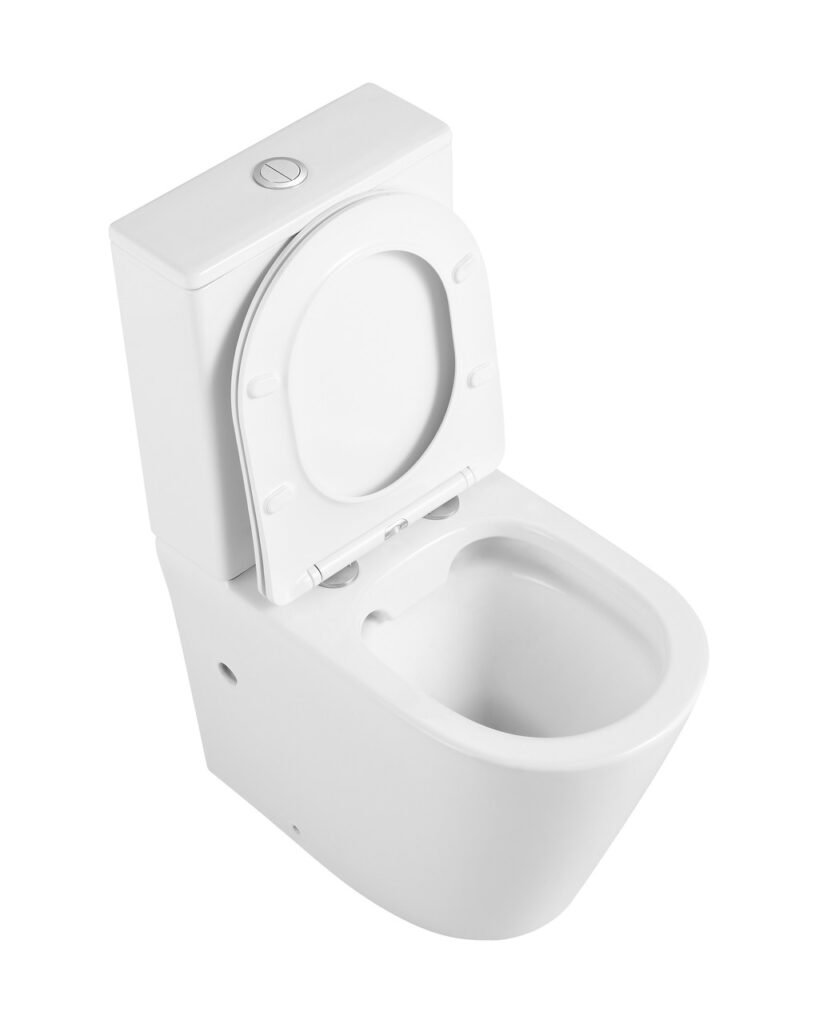
Sanitary ware is a regulated product in the Kingdom
A toilet is not treated as generic cargo at a Saudi port. Ceramic sanitary ware sits inside a Saudi technical regulation — the building-materials regulation that covers bricks, tiles, ceramics and sanitary ware — and products inside a technical regulation are what SASO calls regulated products. That classification decides the whole import sequence, and it is worth understanding before a quotation is agreed rather than after a container is booked.
The framework is the SALEEM programme, the Saudi Product Safety Programme that SASO launched in 2017. SABER is the online platform that administers it: imported products are registered and certified through SABER, and the platform doubles as the repository for product information, documentation and certificates.
Two certificates, and they do different jobs
For a regulated product the conformity assessment runs in two stages.
- Stage 1 — Product Certificate of Conformity (PCoC): issued for the product itself, against the applicable product standard inside the relevant technical regulation, through a SASO-approved certification body. The PCoC is valid for one year.
- Stage 2 — Shipment Certificate of Conformity (SCoC): issued per shipment, after the certification body verifies that a valid PCoC exists for the products in that consignment. The SCoC is valid for that shipment only.
The practical reading: the PCoC is the long-lived document that proves the model conforms, and the SCoC is the release document that travels with each consignment. A shipment cannot be certified against a PCoC that has expired, so the year of validity is a calendar item rather than a technicality.
The importer drives the process, not the factory
This is the part that catches buyers out. Registration and certification on SABER are done by the importer: the importer registers the product, appoints the certification body, supplies the conformity evidence and pays the fees. The exporter’s role is to supply the underlying documents and the product data that the certification body needs. The two halves have to be sequenced, which is why the conformity file belongs at quotation stage.
- Product details mapped to the Saudi customs tariff code — the entry point of the registration
- Test reports and conformity evidence for the applicable product standard
- The model-level documentation the certification body will ask for
- A named certification body, appointed by the importer, before the shipment is planned
A CE file is not a substitute
Buyers often assume that the certificate they already hold for a European programme will carry into the Gulf. It does not. A CE file is useful evidence and an experienced certification body will read it, but the Saudi PCoC is issued separately, under the Saudi technical regulations, through SABER. Treat the two as parallel approvals rather than one approval with two stamps — and where a model sells into both markets, keep the documentation for each in its own file from the start.
What we supply from our side
Our models for the Saudi market are marked accordingly, and the certificate documents are provided on request. Ask for them with the quotation rather than with the packing list: the importer cannot open the SABER registration without the underlying documentation, and a week lost there is a week lost on the whole consignment. Tell us the destination market when you brief us and we confirm the conformity position for the exact model before sampling, the same way we do for the European and Australian ranges.
Start the file with the inquiry
Send us the model codes, the quantity and the market, and name your certification body if you have already appointed one. We will confirm what the model carries, provide the documentation the body will ask for, and give you a lead time that accounts for the conformity step instead of discovering it at the port.
Related on this site
- Our Saudi Arabia market file
- The models we produce for export markets
- The certificates and test reports we hold
- Catalogue, technical drawings and the document set
- Ask for the conformity documents for the Saudi market