
What a sample settles
A sample is the cheapest decision in the whole order, and the only one that gives a buyer something to hold. It answers the questions that a catalogue, a photograph and a video call all leave open.
- The glaze, in the hand rather than on a screen — how a matt finish reads next to a competitor’s, and whether the white is the white your market expects.
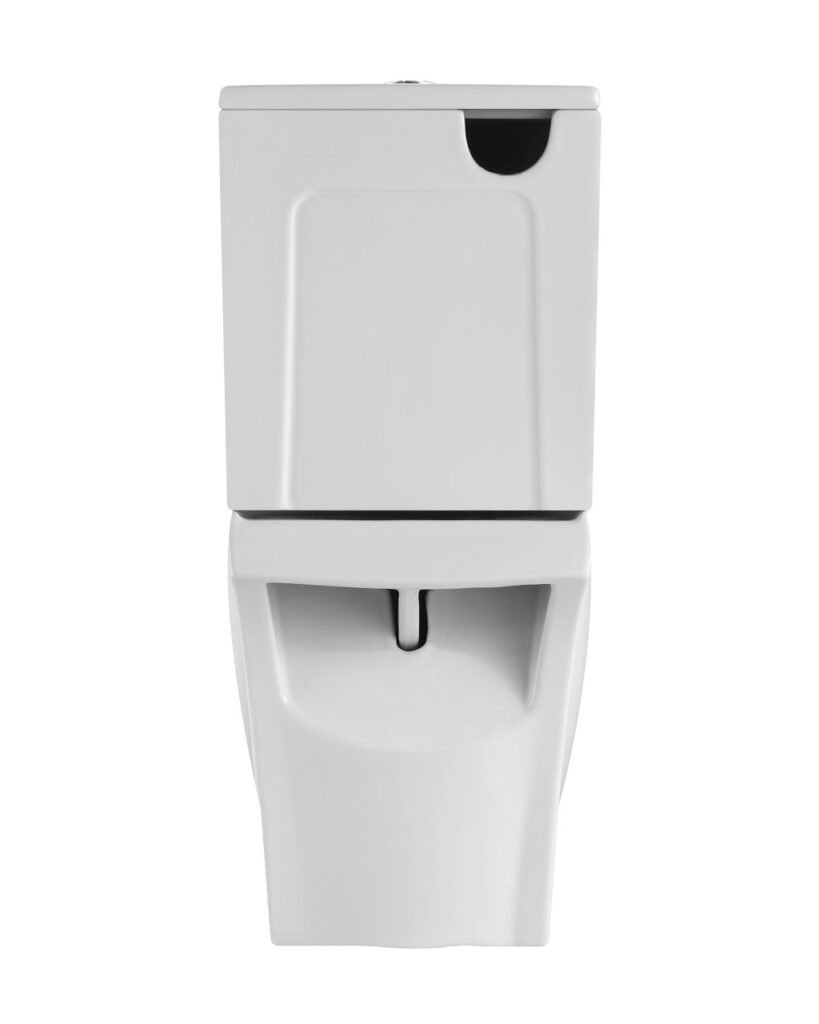
- The form: the bowl profile, the shoulder of the body, and how the seat and hinges sit when the piece is assembled.
- The weight and the feel of the ceramic, including the parts a photograph never shows — the underside, the trapway opening and the finish of the rim.
- The single-unit packing, which is the first prediction you can make about how the container will travel.
Sample orders are free, and the showroom holds the current range if you would rather inspect several models at once than receive one in a crate.
What a sample cannot settle
The failure mode is not a bad sample. It is a good sample being asked to answer questions it was never able to answer.
- Production consistency across a run. One piece is not a batch. Consistency is what the batch QC record and the approved reference together are for, not what a single sample demonstrates.
- Loading and transit. A sample arrives in its own packing; a container arrives under load, stacked and handled. Those are different tests.
- Market approval. CE, WaterMark, SASO and the rest are processes tied to a model and a market, and a sample settles none of them.
- Anything you did not specify. A sample of a model with one trap arrangement tells you nothing about the arrangement you actually need.
- Price at volume. The commercial terms belong to the order, not to the piece on the bench.
Sample the model and the finish you will actually order
This is the most common way a sample is wasted: the white version is approved and the matt black one is ordered, or a two-piece is sampled and a one-piece is bought. The sample has to be the object, not a stand-in for it.
The finish decision has a commercial edge that the shape does not. White-glaze models start at MOQ 0, so a white sample and a white first order line up with nothing lost. Coloured and matte versions carry MOQ 30 per model, which makes a colour choice an order commitment rather than an experiment — all the more reason to have the colour in your hand before it becomes one.
Recording the approval
A sample that is not recorded turns into an argument eight weeks later. Five things are worth writing down at the moment of approval:
- What the sample was approved for — the glaze, the profile, the seat, or all three. An approval without a stated purpose approves everything and therefore nothing.
- The printed code and the finish, exactly as they will appear on the order.
- The date, so the reference has a version.
- Any deviation you accepted and any you refused.
- The kept piece. The approved sample is the reference; a photograph of it is not.
On our side the matching record exists: every batch is tracked on the QC board from casting through to palletising, so a container can be traced back to its firing dates. If your process needs that traceability, ask for it with the order rather than after the container lands.
From sample to container
- Inspect in the showroom or by video call, or order a free sample of the exact code.
- Decide the finish. White glaze opens the order at MOQ 0; coloured and matte finishes carry MOQ 30 per model.
- Write the approval down and keep the piece.
- Confirm the open specification lines — trap and rough-in, and anything that has to be in the set — before the order is raised.
- Raise the order. The production window is confirmed with the order, and the export cycle from there is set out in our OEM article.
A sample that is wrong is the cheapest mistake in the order. Fix the finish, the seat, the profile or the packing while it is still one piece on a bench, and re-sample. Every one of those decisions becomes several times more expensive once it has been cast into a container and is sitting on a quay.
That is the whole argument for sampling early rather than sampling thoroughly: the value is in the timing, not in the number of pieces requested.
Frequently asked questions
Do you charge for samples?
No. Sample orders are free. Send the model code and the finish you want to see, and the terms for that specific request are confirmed with the reply rather than assumed.
Can I inspect the range before I commit to a sample?
Yes. The current models stand in our showroom for live inspection, and video calls are welcome if you want to work through several models before booking a flight. Both routes start with an enquiry.
Will the container match the sample?
The container is built to the same model and the same printed code, in the finish you approved. What the sample cannot carry across on its own is batch consistency — that is what the batch QC record and the kept reference are for, and both can travel with the order.
Which finish should I ask to sample?
The one you intend to order. If the plan is a white first order, sample white: white-glaze models start at MOQ 0, so the sample and the order are the same decision. If the plan includes a colour, sample the colour, because coloured and matte versions carry MOQ 30 per model.
How long does a sample take?
It is agreed with the enquiry rather than fixed in advance, because it depends on the model and the finish. Enquiries are answered within one working day, and the reply carries the timing for the specific sample.
What should I record when I approve a sample?
What it was approved for, the printed code, the finish, the date, any accepted deviation, and the piece itself. An approval that does not say what it covers is the point at which a sample stops preventing a dispute.
Related on this site
Start an enquiry
- Request a sample of a specific model
- Catalogue and drawings — check the code before you ask
- The plant, the showroom and the QC record
Read next
- MOQ 0 explained: why white-glaze try orders carry no minimum
- From your drawing to a loaded container
- Ceramic breakage: how a claim is actually settled
Models people usually sample first
- 6093BAC — two-piece classic, white
- 6079A — fully skirted one-piece
- 6093B OASIS — three finishes, including matt black