
OEM and ODM are not the same brief
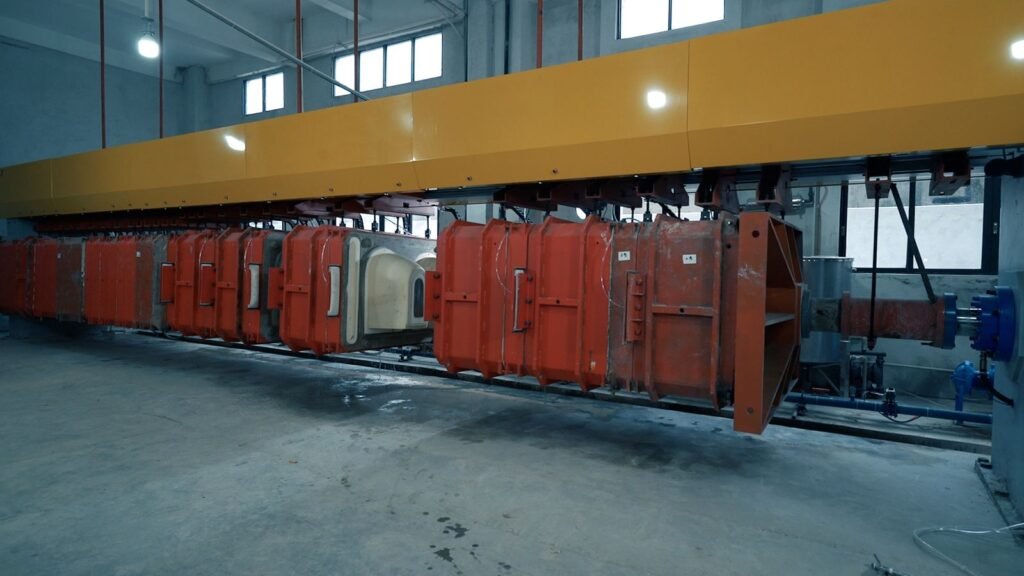
OEM is a piece built to your specification: your drawing, your brand, your packaging. ODM is a piece from the factory’s existing range, badged and packaged for your market. In ceramic sanitary ware that distinction carries more weight than it does in assembled goods, because the body is cast in a mould and then fired — a real OEM change usually means a new mould and a longer first cycle. Most first orders are ODM, and that is not a compromise: it is the faster, cheaper way to test a market, and it is what a white-glaze catalogue model with MOQ 0 exists for.
Stage 1 — What to send with the brief
A quote is only as good as the brief behind it. For a catalogue model, the model code and your market are enough to start. For a custom design, send the drawing and say where you are flexible.
- Model code — or a drawing or reference sample for OEM work
- Target market, because it decides which certification applies (CE, WaterMark, SASO, CIDB/SIRIM)
- Quantity and mix, including how many models go into the first order
- Finish: white glaze, or a coloured or matte glaze at MOQ 30 per model
- Trap type and roughing-in where the model offers options — and for a wall-hung pan, the in-wall frame you intend to use
- Packaging and labelling expectations, and the destination port
Stage 2 — Samples before mass production
Samples are free of charge on catalogue models; freight is the only cost we discuss, priced per destination. A sample order is not a shortcut around the line — the piece goes through the same casting, glazing and firing sequence as production. That is why custom or sample orders are quoted at 30–40 days rather than the standard 30.
Stage 3 — Production runs on lines that already exist
Our plant in Chaozhou covers 51,000 m² with 285 people, and one 130 m tunnel kiln fires 1,300 sets a day across 25–28 working days a month. Ten production months a year is the planning basis, not a theoretical ceiling. An order moves through four stages:
- Spec and sample — your drawing and your label, or one of our catalogue models
- Production — casting, glazing and firing on dedicated lines, with in-process checks at each stage
- QC and certification — we build to the marks your market requires
- Loading and export — seaworthy cartons, pallets and export documents handled in-house
Stage 4 — The marks and the paperwork
Certification is a market-entry question, not a marketing one. CE covers our wall-hung toilets for the EU; WaterMark and WELS apply to Australia and New Zealand; SASO to Saudi Arabia; CIDB/SIRIM to Malaysia. Tell us the market when you brief us and we confirm what the model carries before sampling — so a certificate question never surfaces after the container is booked. The certificates and test reports we hold as documents are downloadable without a login, straight from the downloads page; for the marks where the document travels with the order, ask us with your enquiry.
Terms you can plan around
- MOQ 0 on white-glaze catalogue models; MOQ 30 per model on coloured and matte glazes
- Samples free of charge — freight discussed per destination
- Payment by T/T or L/C at sight
- Lead time: 30 days standard, 30–40 days for custom or sample orders
- Warranty: ceramic body for life, fittings and parts for five years
- FOB Shenzhen port, standard export packing
Where OEM projects lose weeks
Three avoidable causes, and we see all three. A brief that leaves the finish or the trap type open until after the sample arrives. A wall-hung pan ordered on its own — the bowl is only the ceramic half of a system, and the in-wall cistern frame and wall plate have to be specified with it. And packaging decided late, after carton artwork has gone to print. Settle those three before the sample ships and the 30-day lead time is realistic rather than optimistic.
Start with a drawing
Send us the model code, your market and the quantity you have in mind. We will confirm the glaze, the trap option and the certification position, and send the drawing for that exact model before you commit to samples.
Related on this site
- Inside the 51,000 m² Sheng Ge factory in Chaozhou
- Technical drawings for 100 models, free to download
- The models already in production